
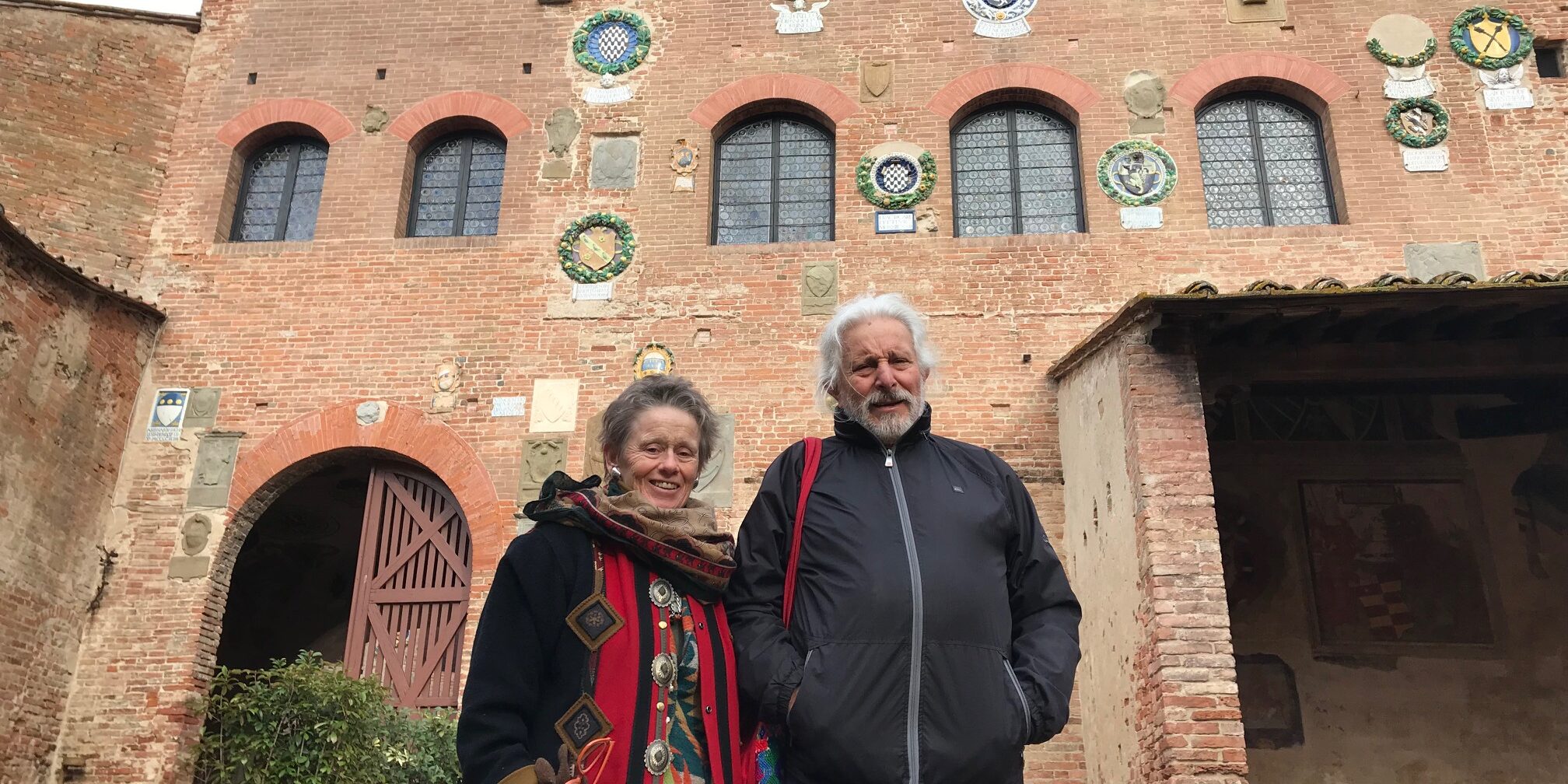
I’d read an article recently about ten “must-see” small-town stops between Umbria and Florence. The author had clearly never been to Certaldo. On an early February trip to Pisa, Pino and I stopped enroute at this little-known Tuscan gem north of Siena.
Below the town in the parking area, a statue of Certaldo’s most famous citizen, Boccaccio (14th c) greeted us. Born either here or in Florence and master of classical Italian prose, Boccaccio forms part of the “triumvirate” of Italian writers of the vernacular, Dante and Petrarch joining him.
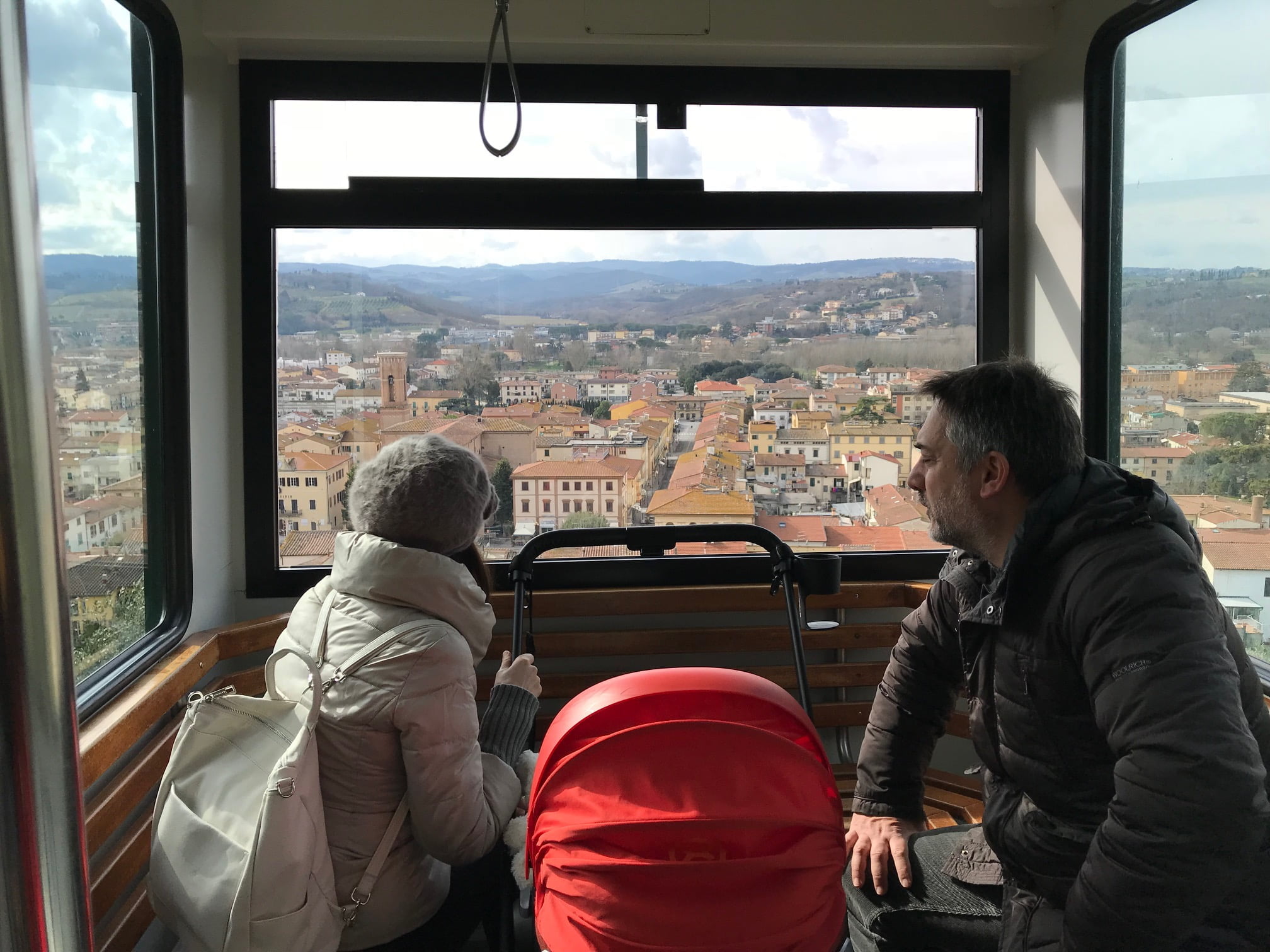
Not far from Boccaccio was the funicular taking us up to the medieval town above: 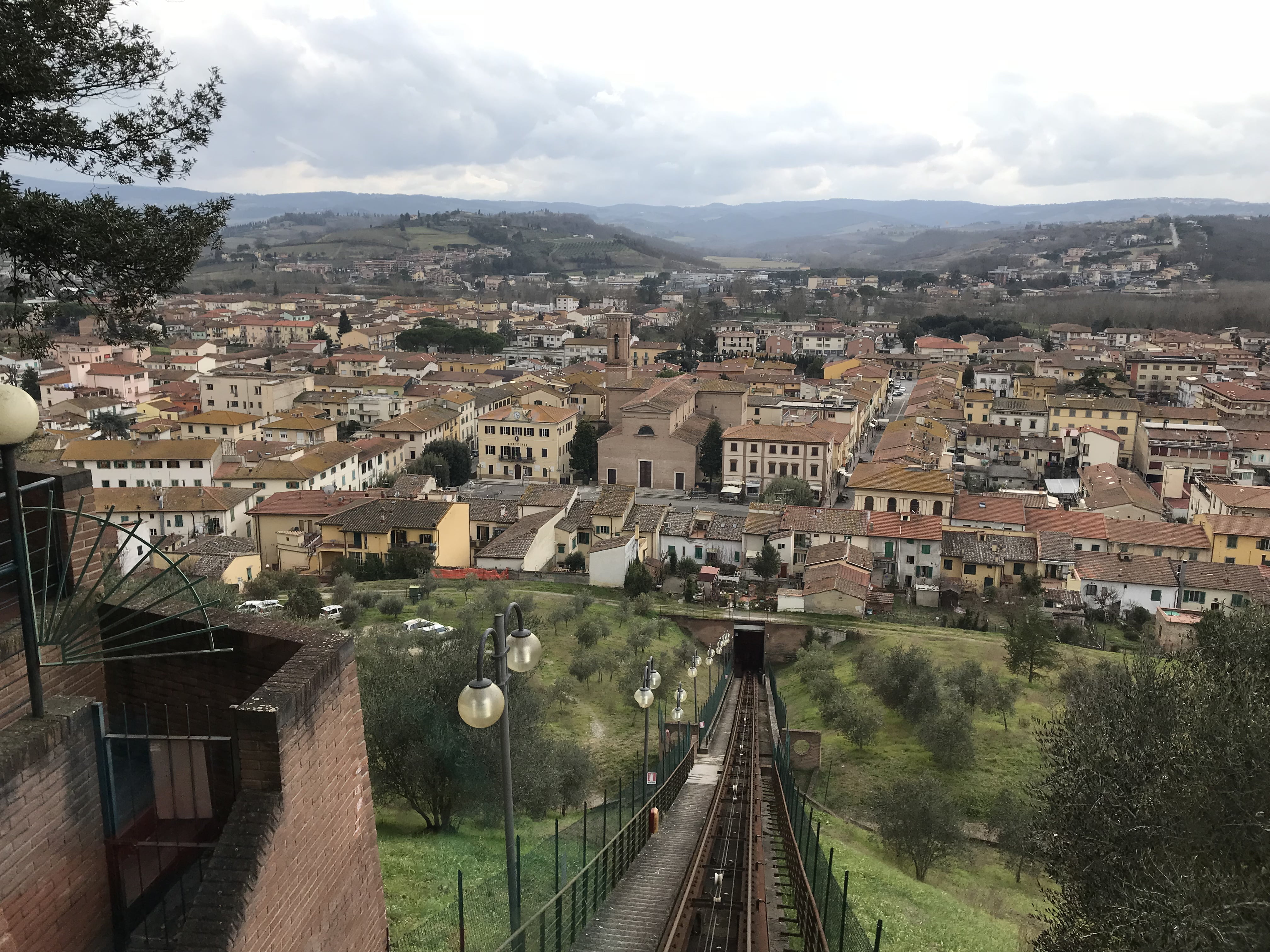
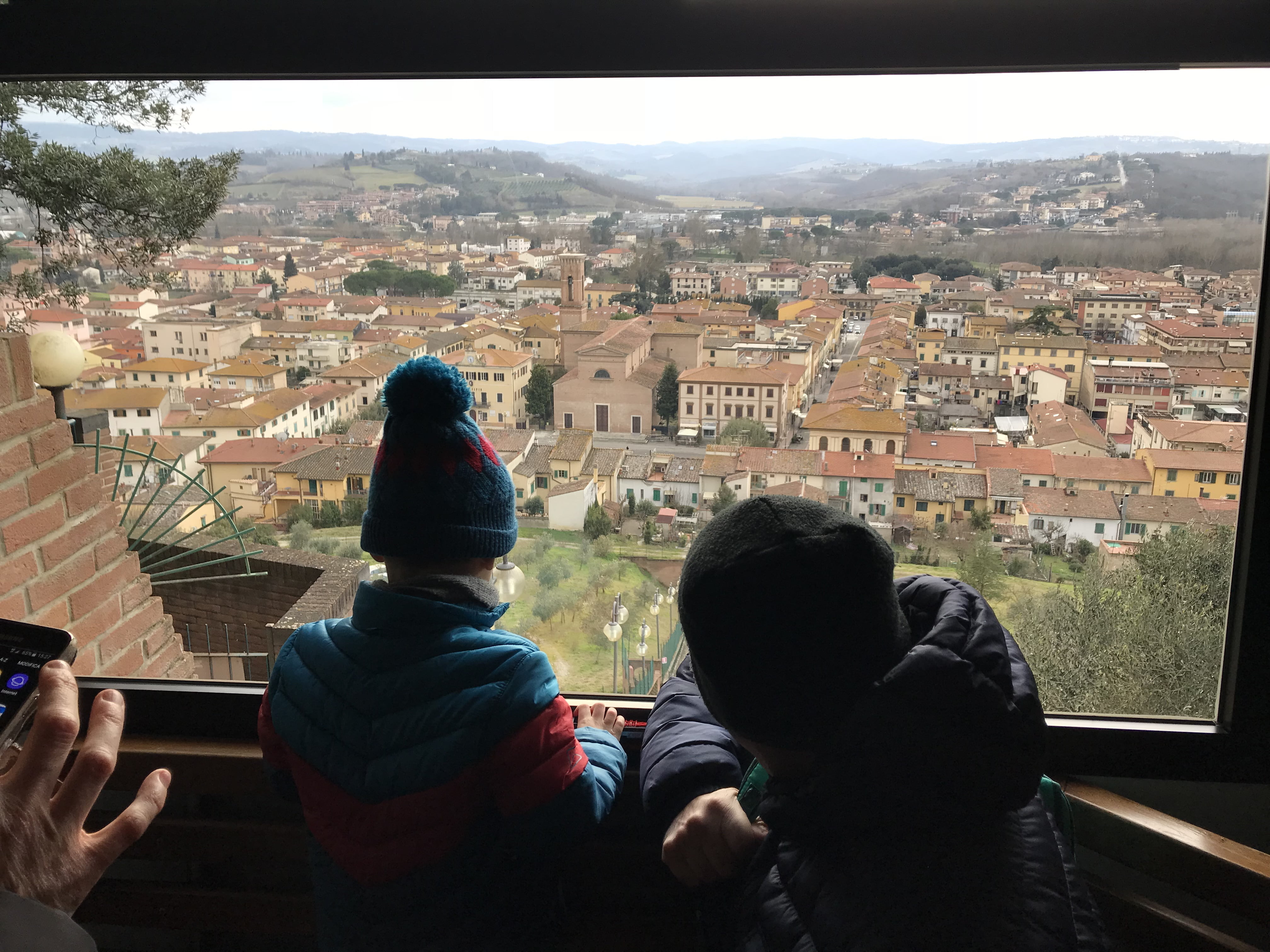
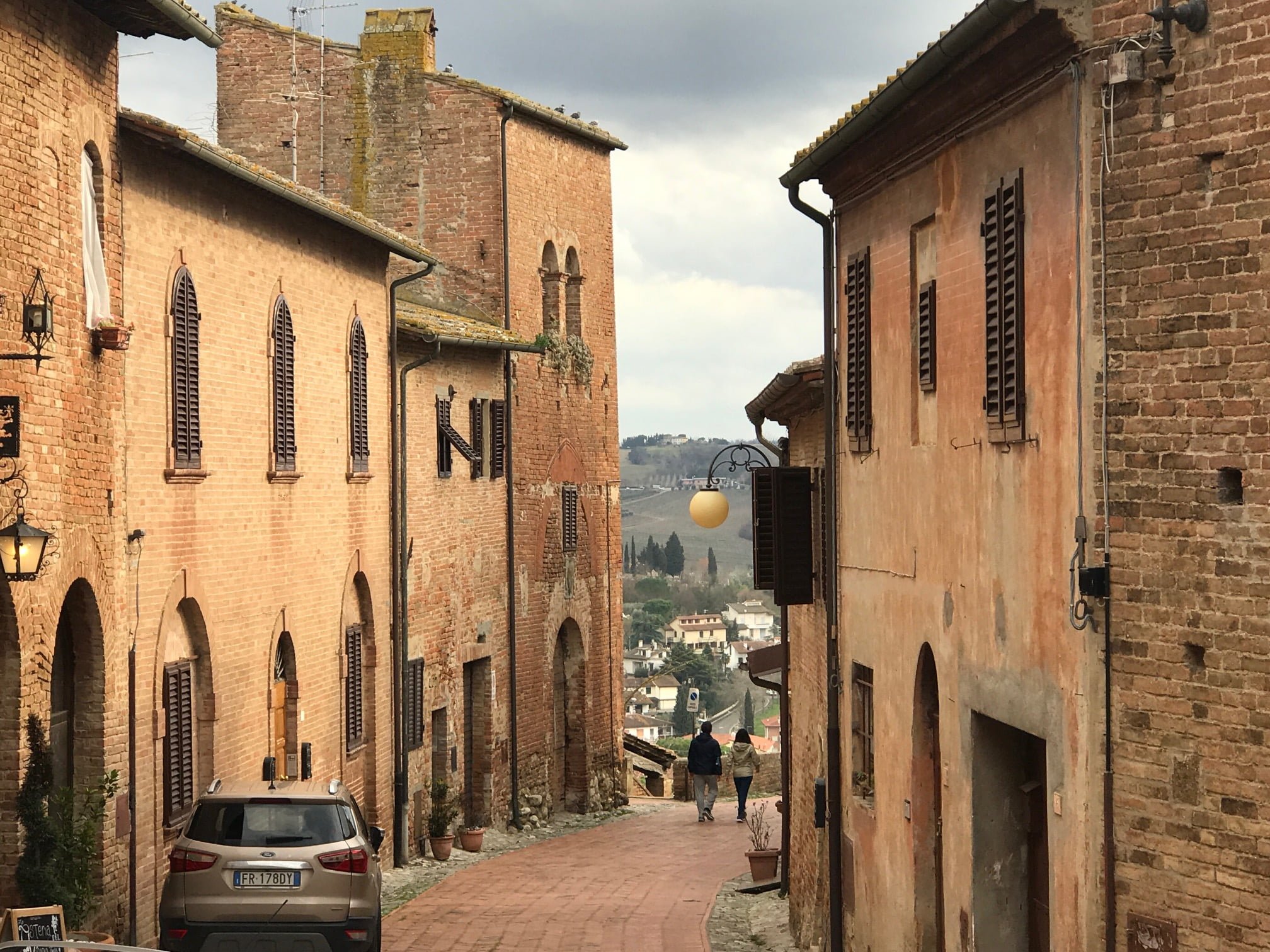
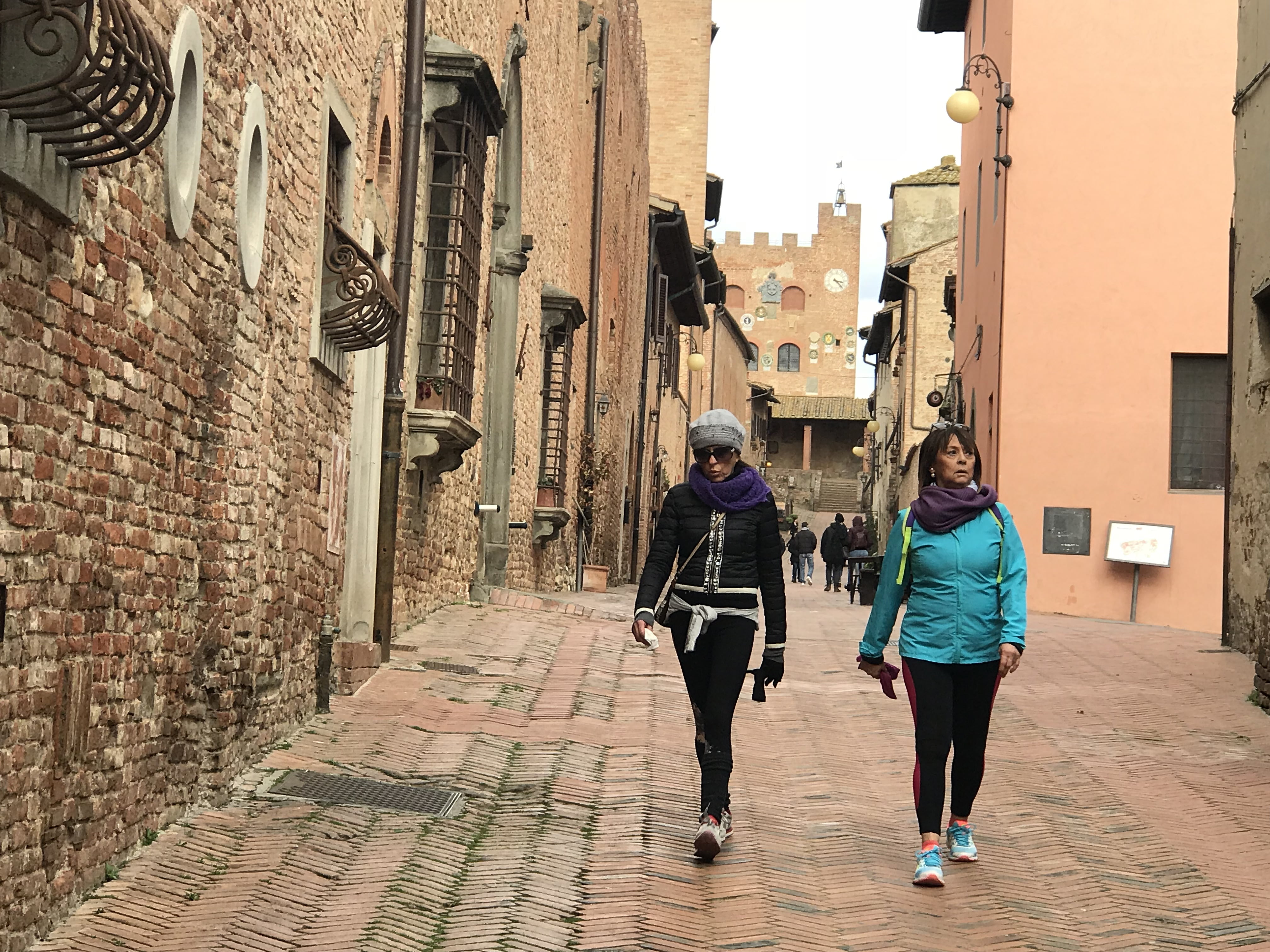
At the top of the funicular in Certaldo’s centro storico, we strolled serpentining alleyways winding in the midst of redbrick houses with crenellated rooftops and pointed medieval arches crowning windows and doorways.
As we explored, I wondered if Boccaccio had used his own picturesque Certaldo as a backdrop for the bawdy and witty tales of love in his “Decameron.”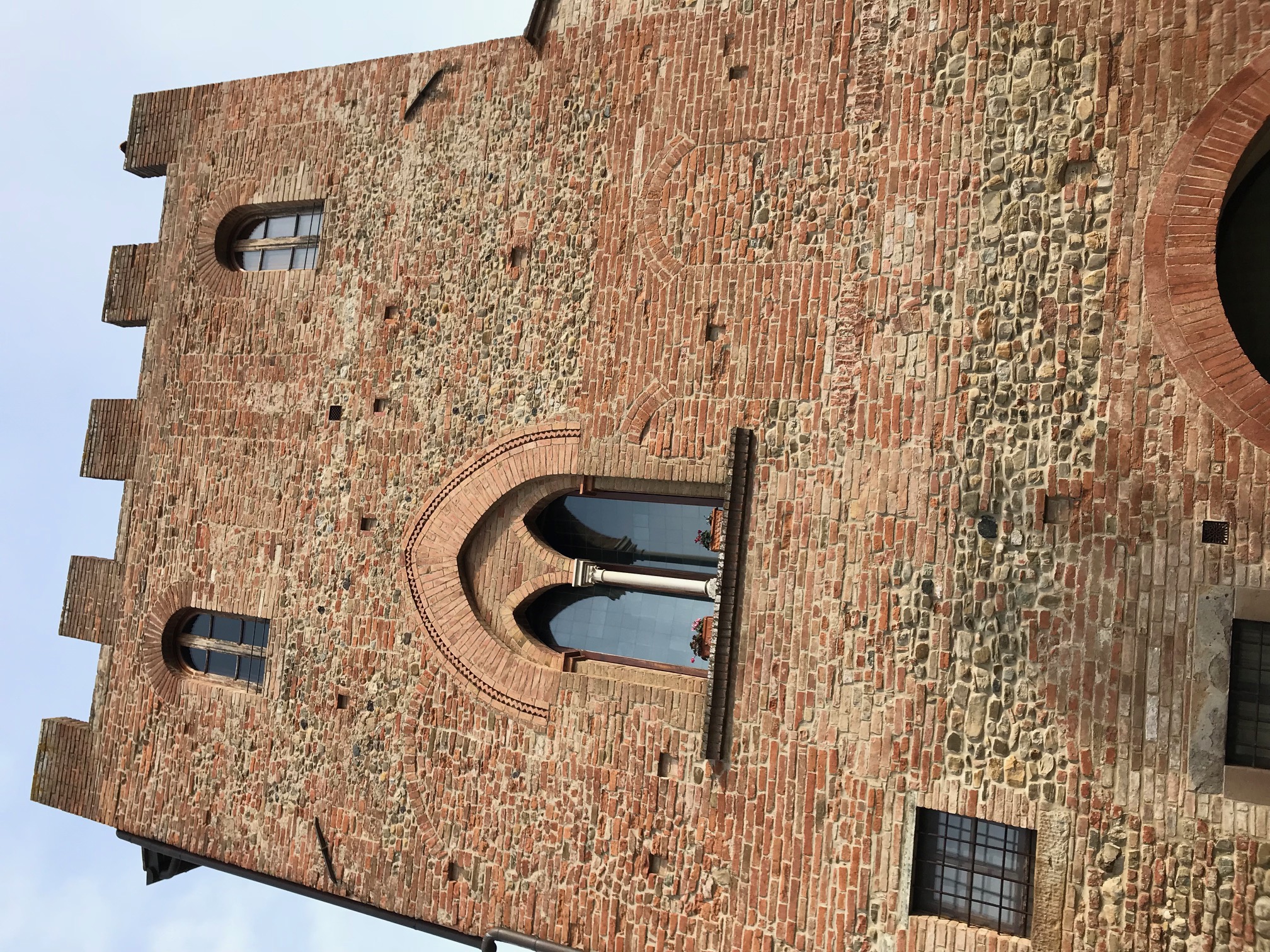
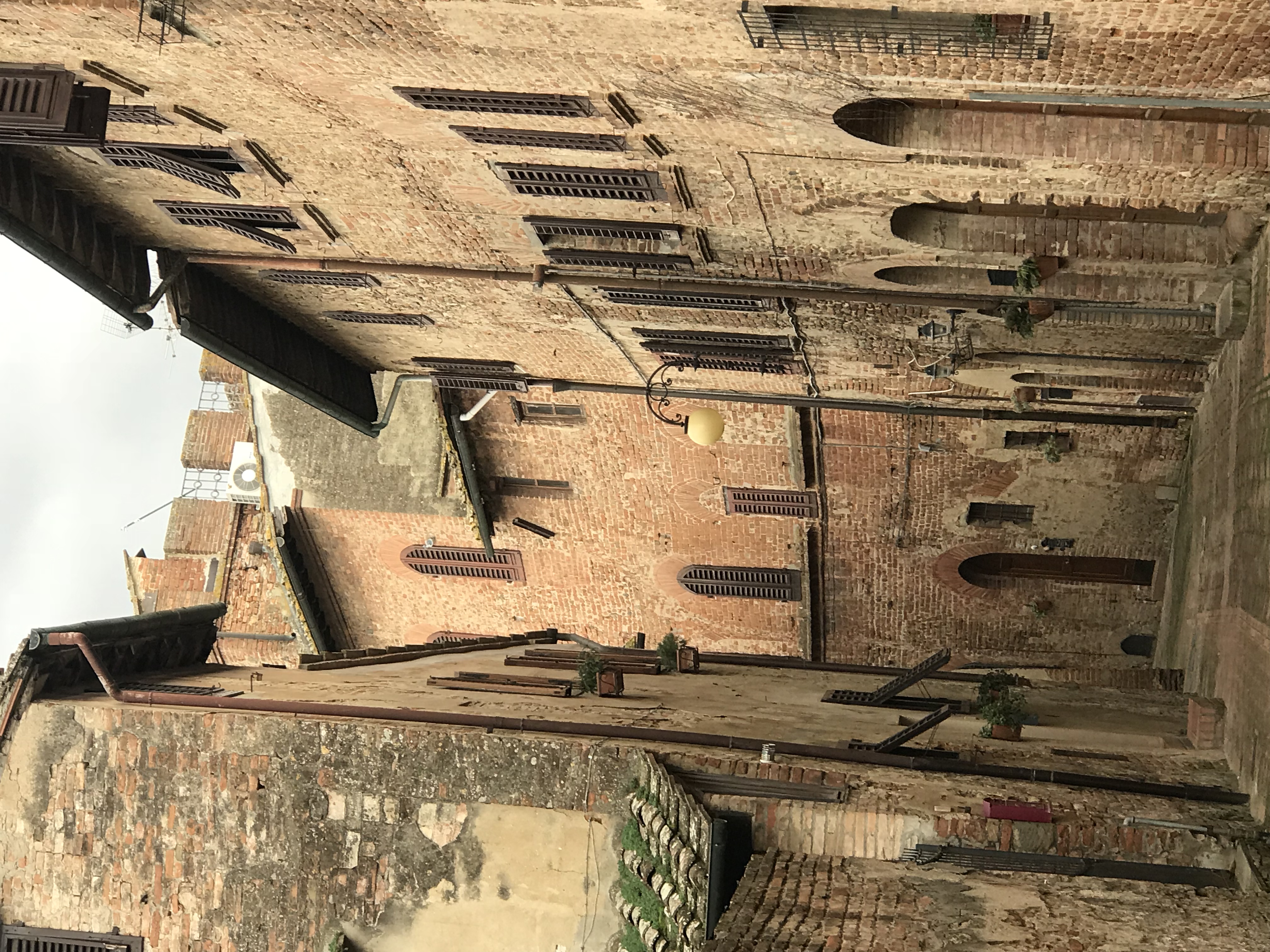
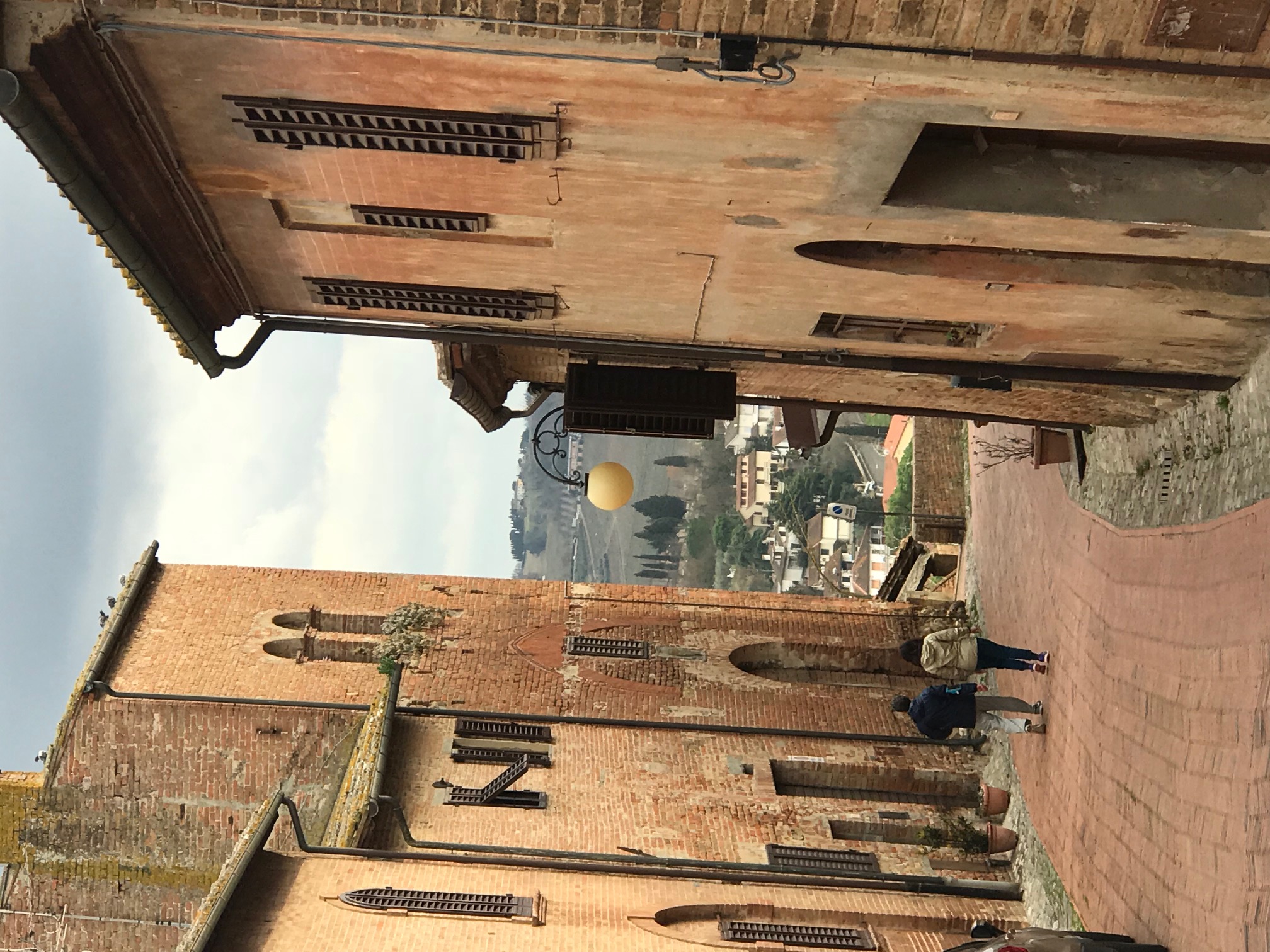
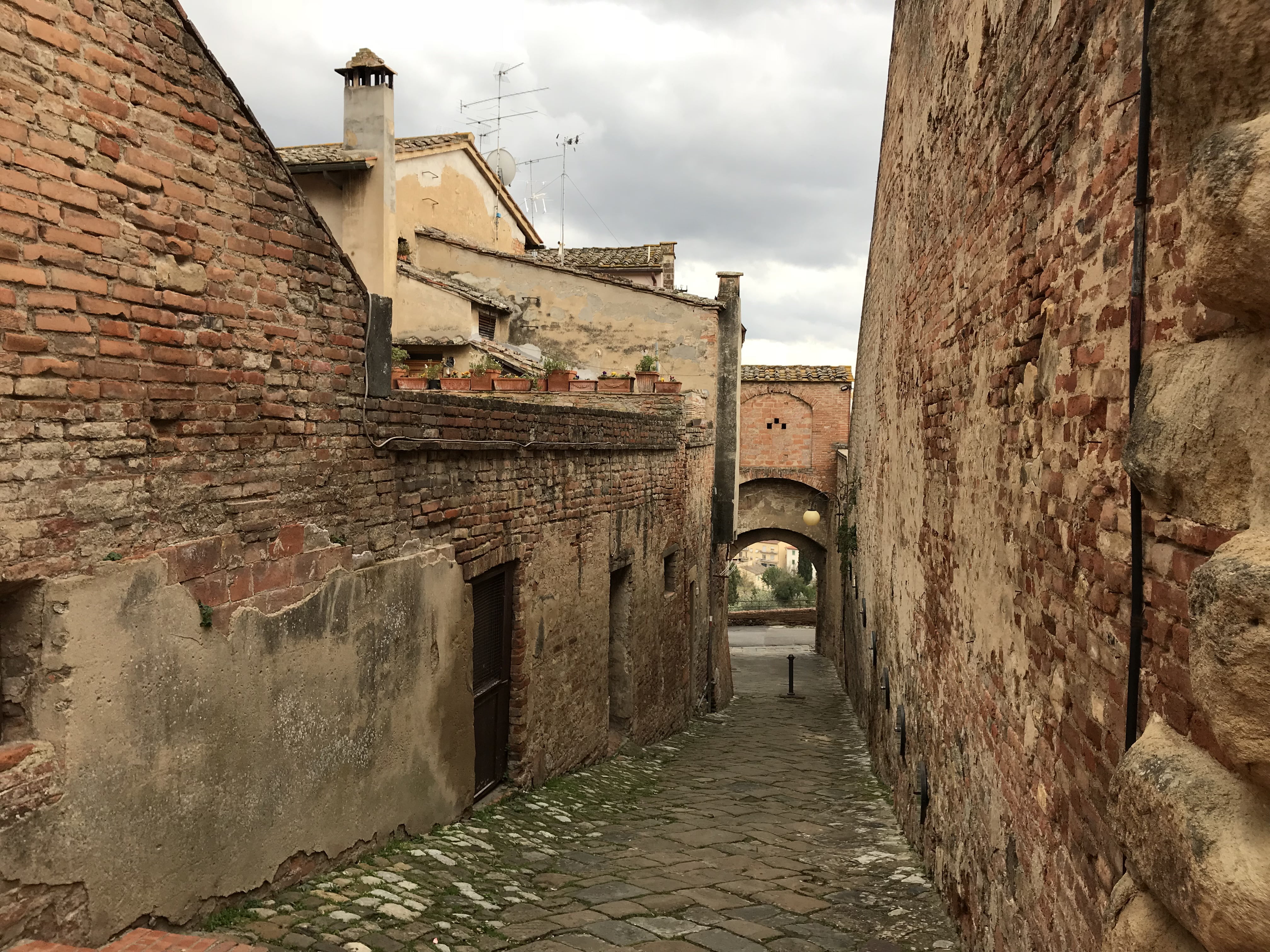
Here and there, swatches of color give life to the redbrick, as did the Della Robbia plaque in a niche in the street named after Boccaccio. That Annunciation is a contemporary rendition of the Della Robbia glazed maiolica…..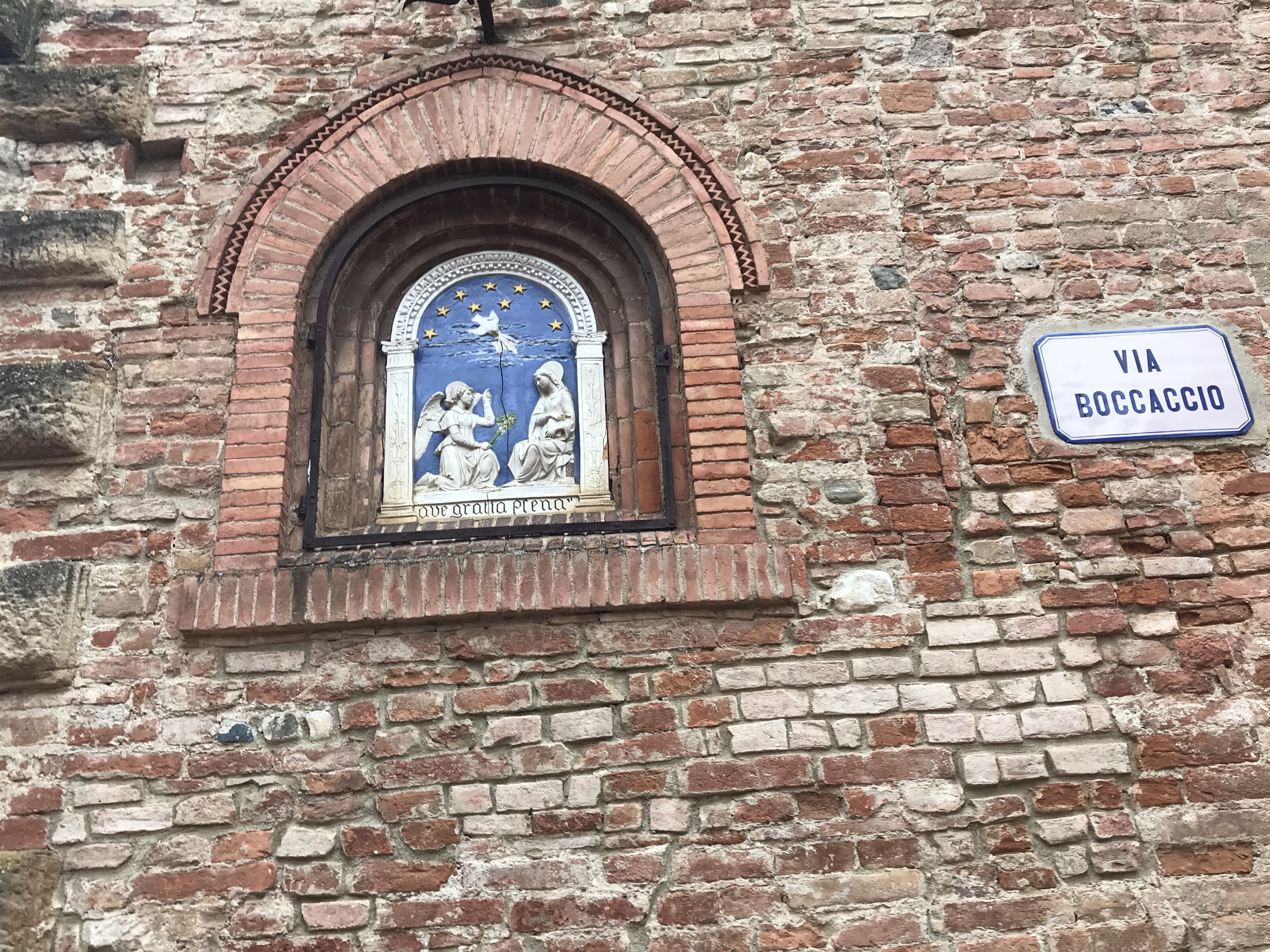
…..but the altarpiece in Certaldo’s church Santi Jacopo e Filippo is mid-16th c. glazed maiolica by Giovanni Della Robbia (and school):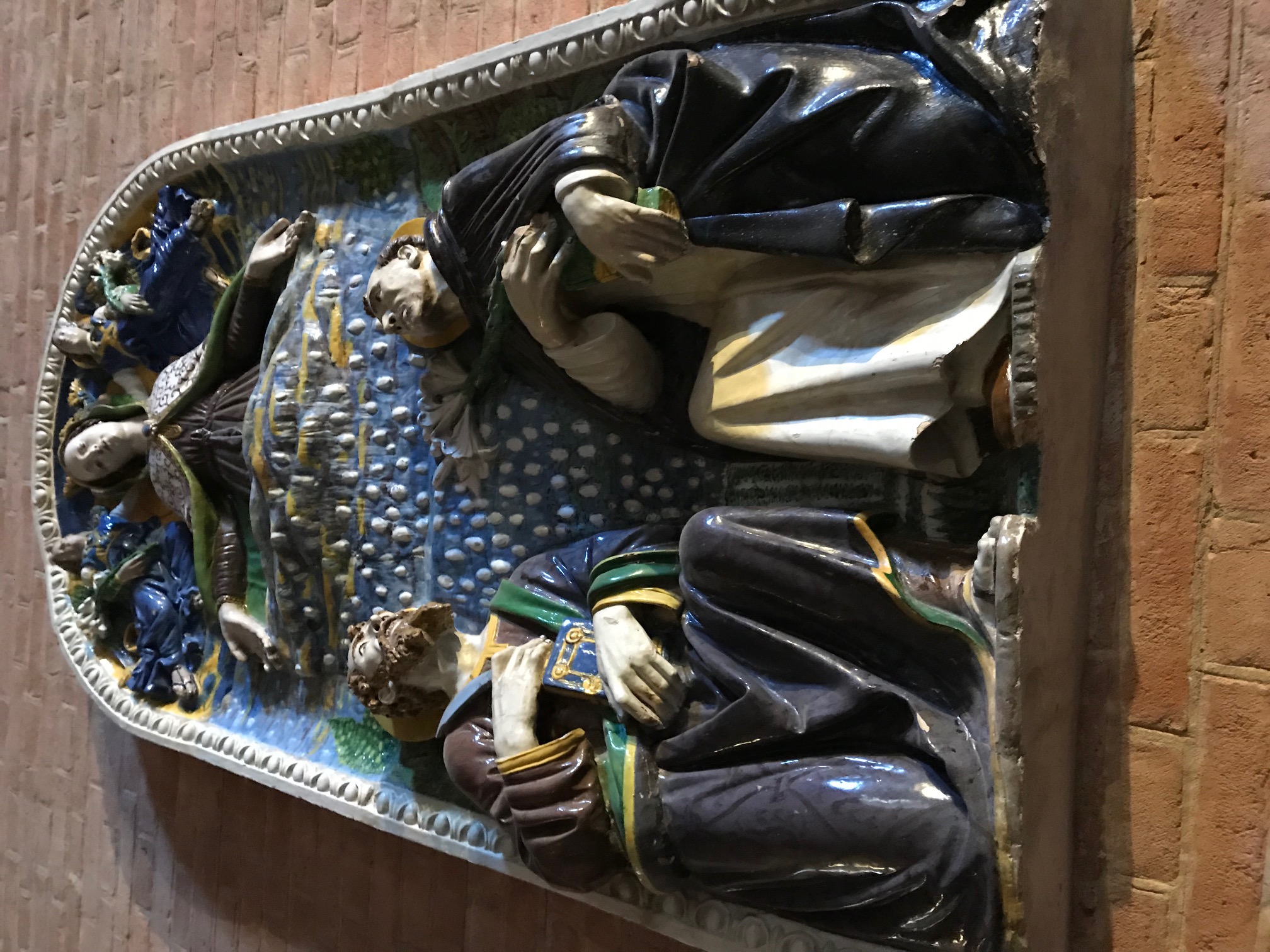
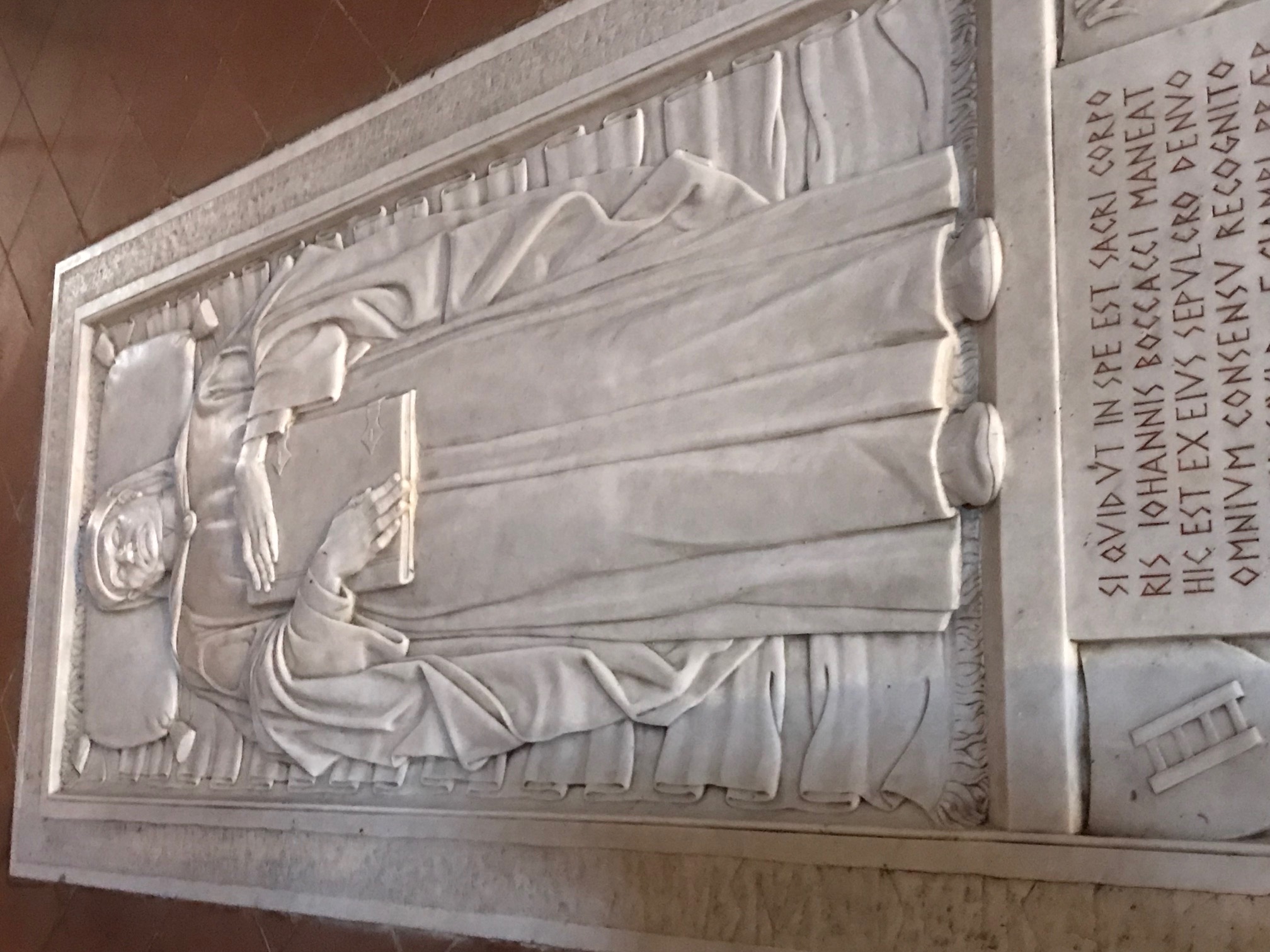
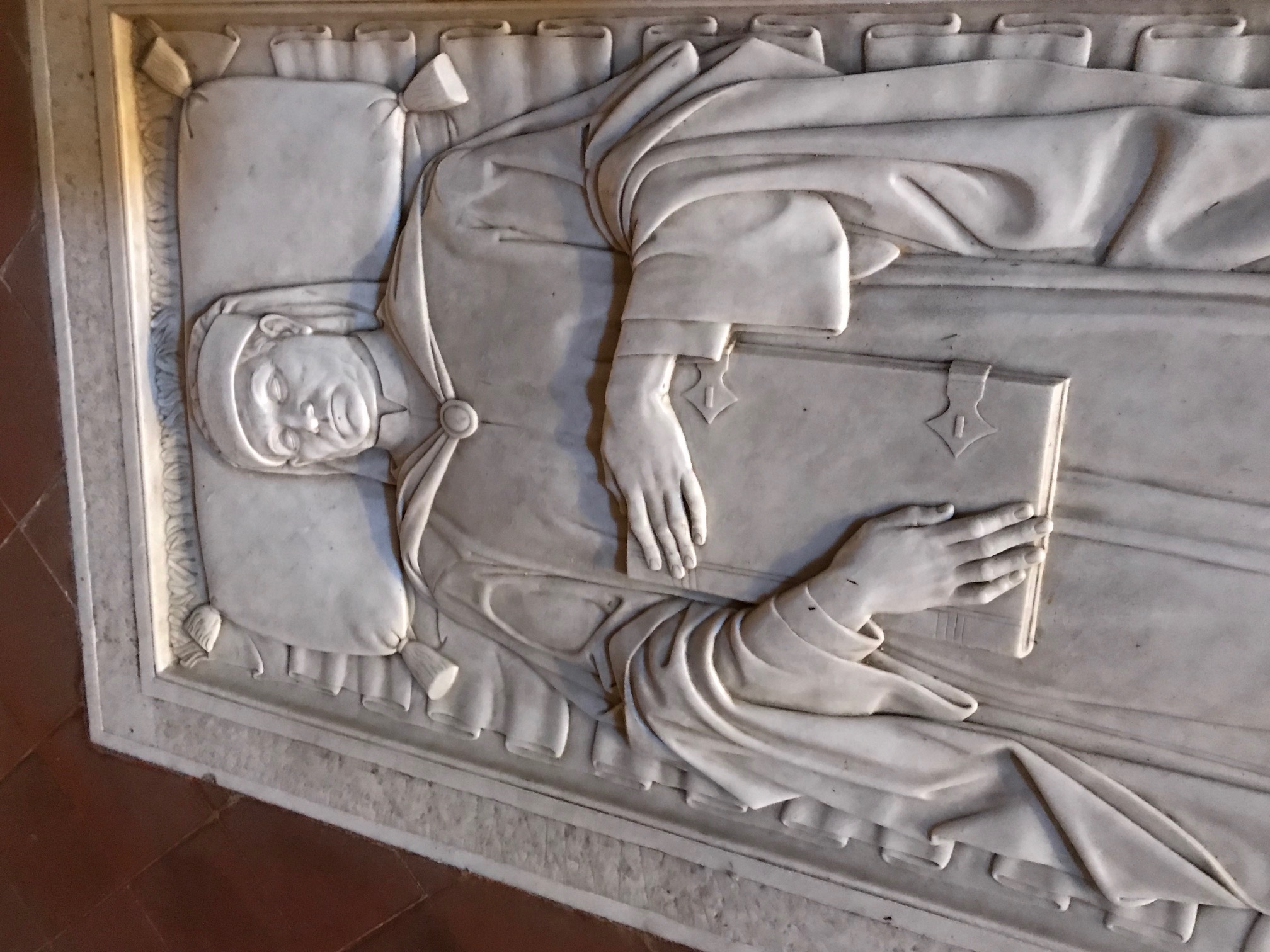
Just beneath the altarpiece is Boccaccio’s tomb (photographed by Pino):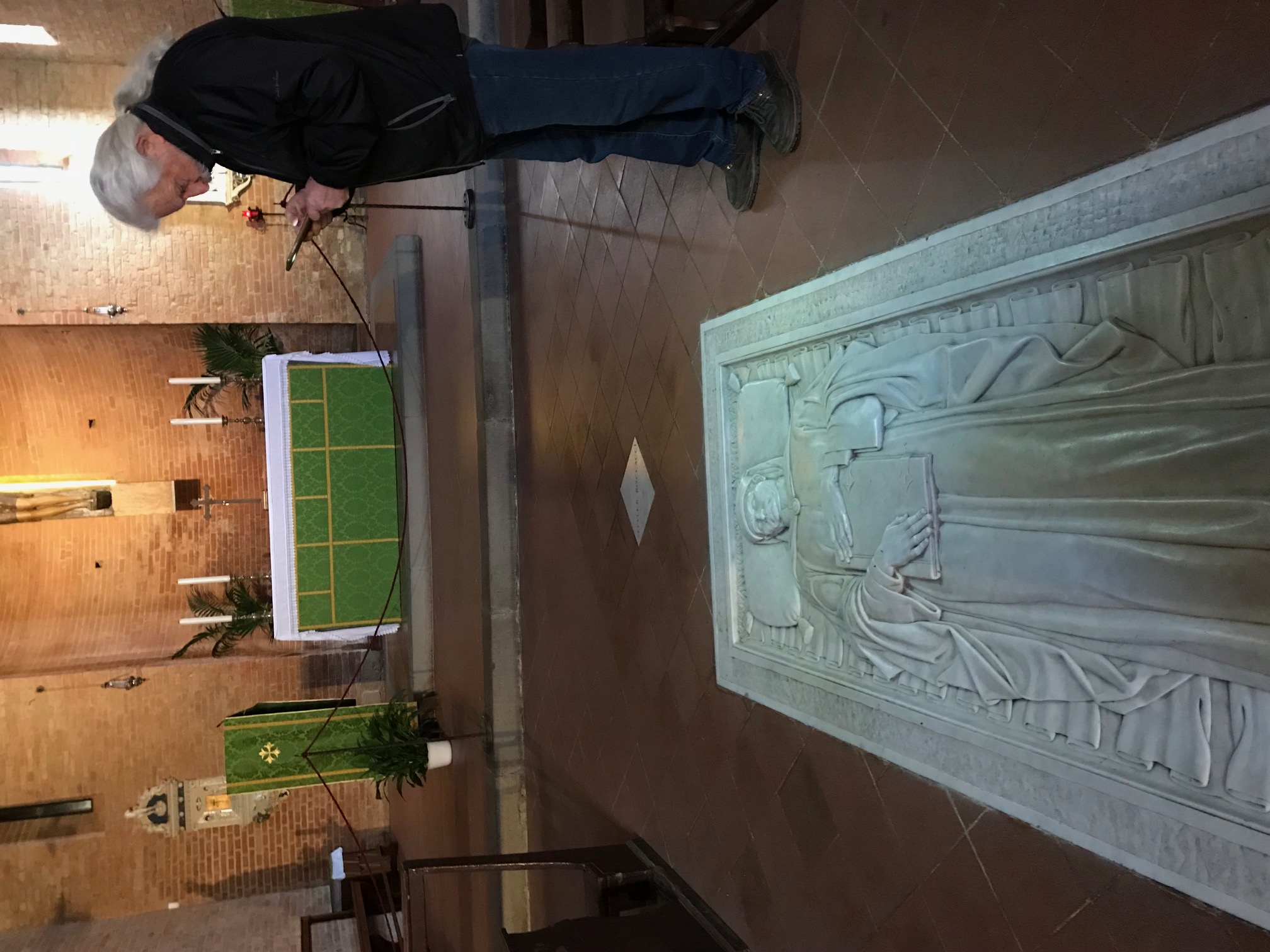
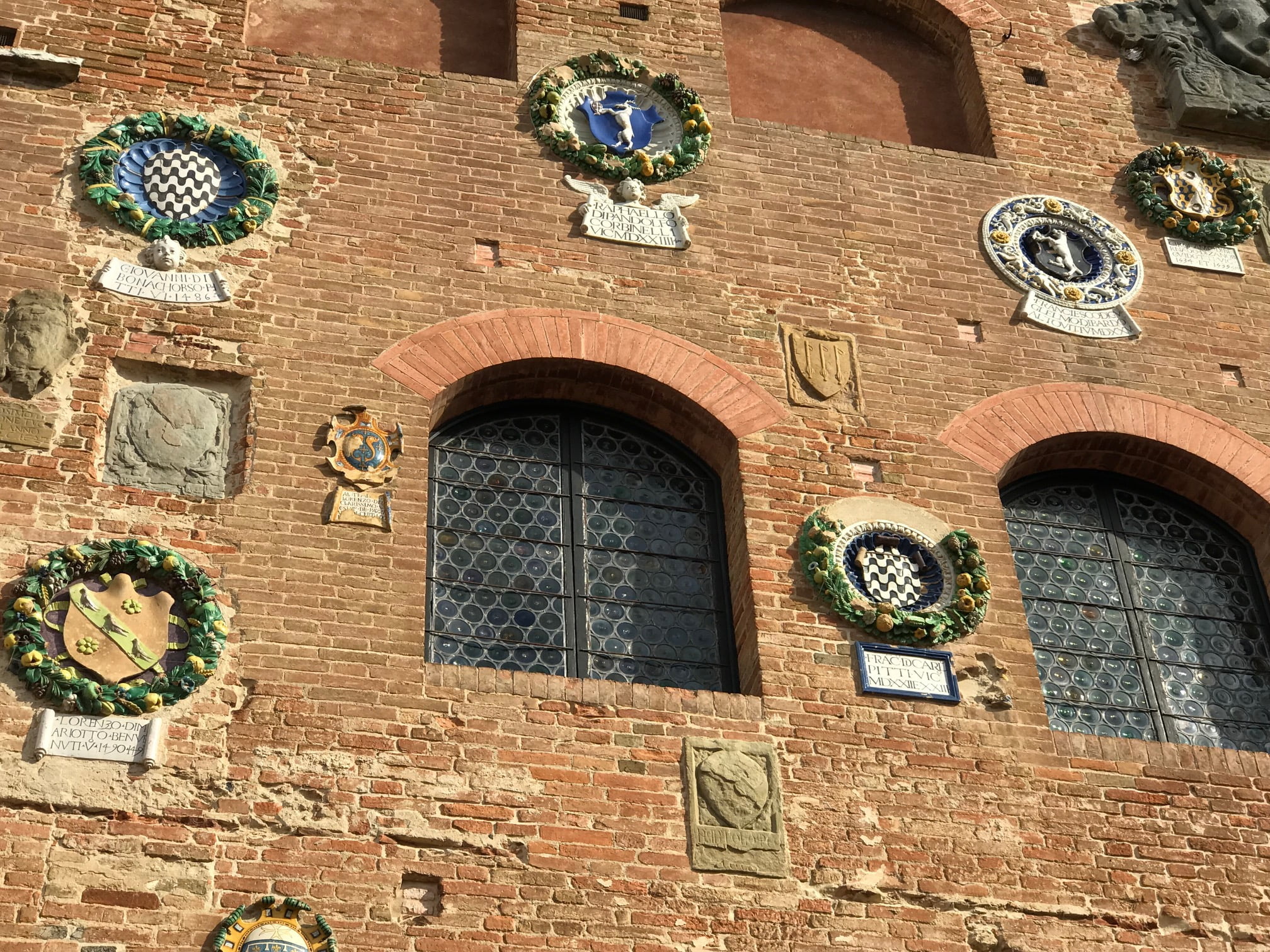
From the church, we headed to the Palazzo Pretorio, 13th-c seat of feudal power where the ruling feudal families’ coats-of-arms in glazed Della Robbia maiolica perk up the red brick facade: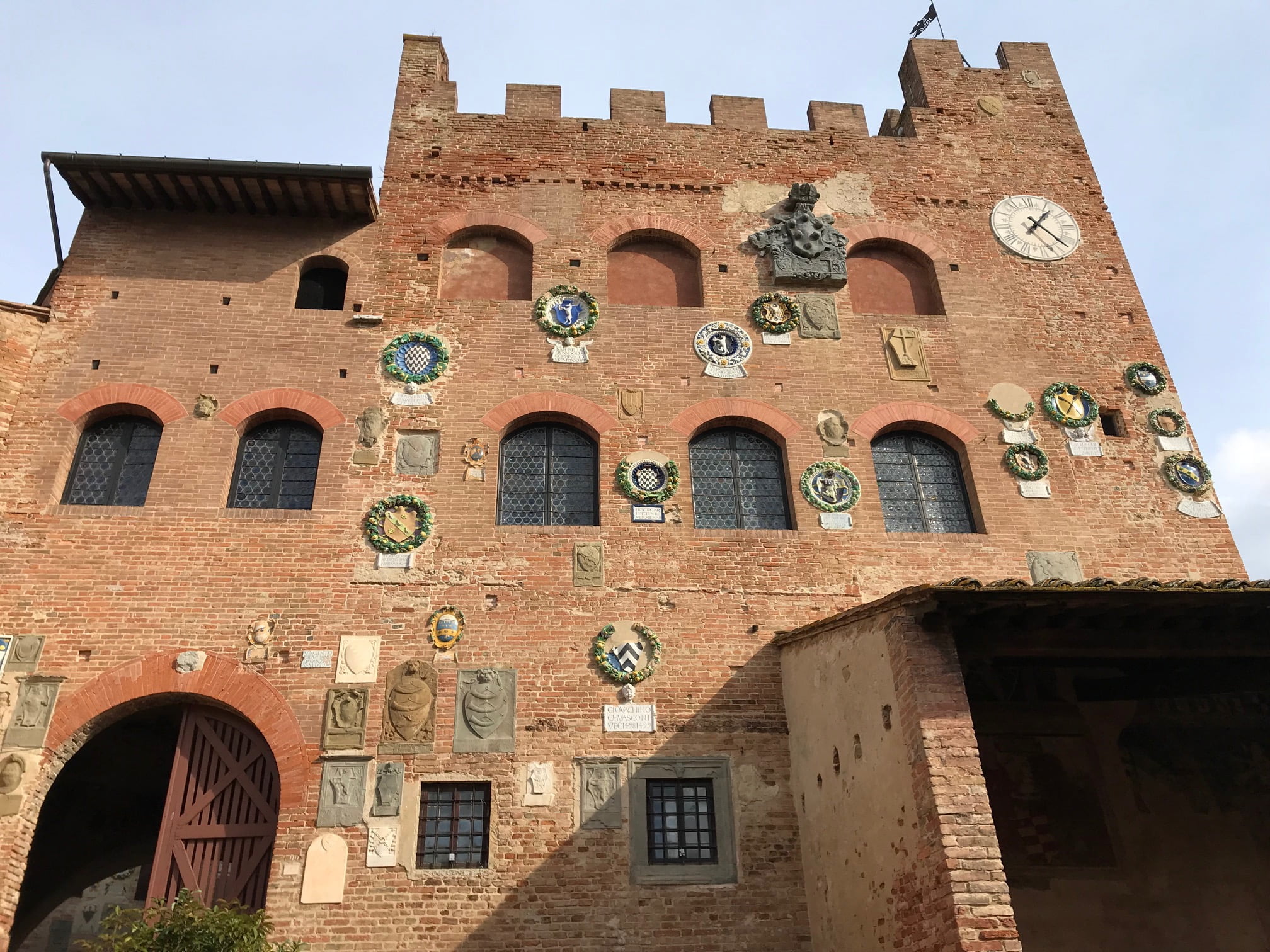
From the palazzo, we wandered past the Casa del Boccaccio (legendary), extensively restored following World War II and then stopped for lunch at a small ristorante flanked by worn wooden doors: A Casa Tua. “At (Your) Home” sounded like an invitation to home-cooking: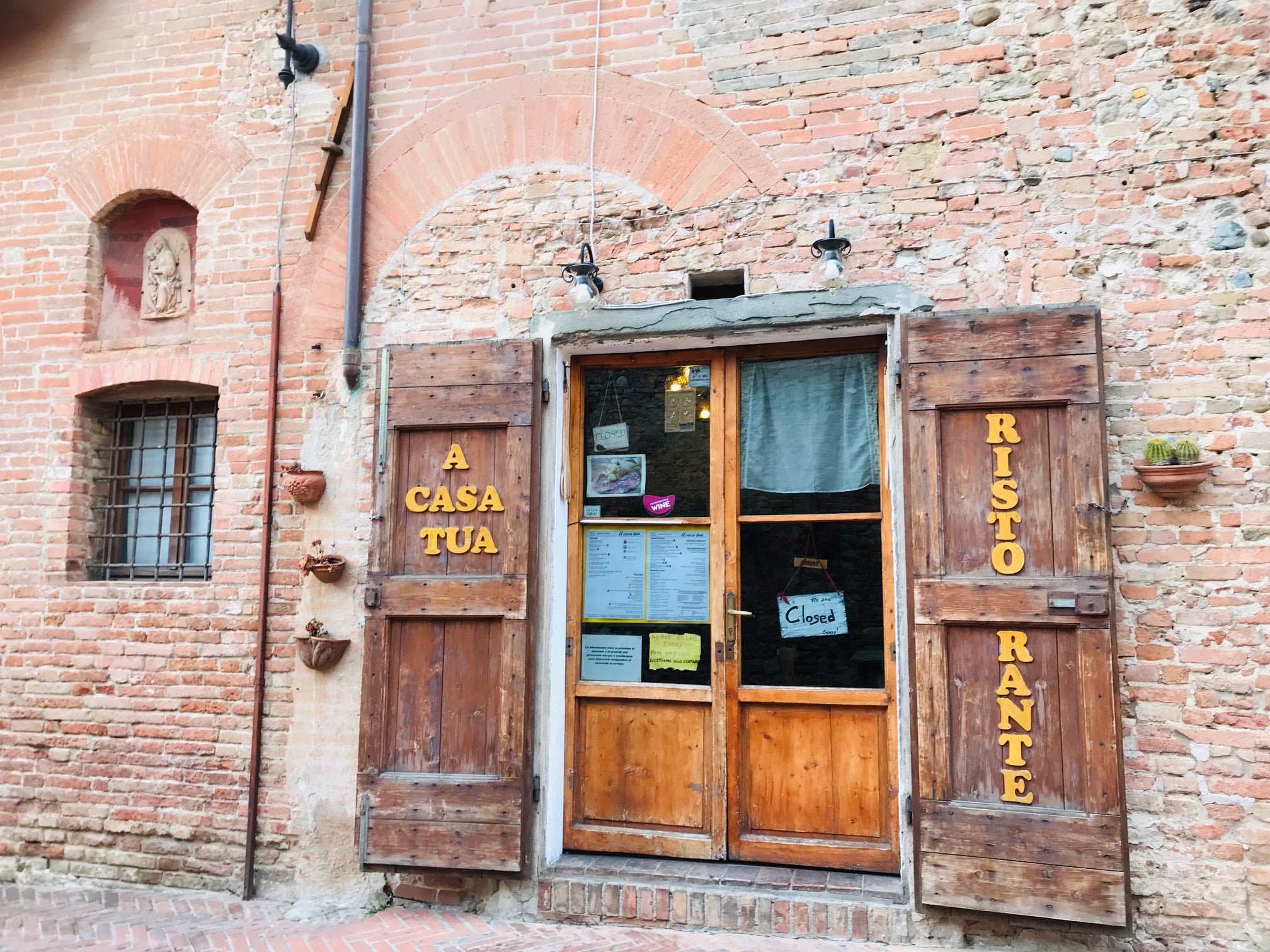
Well, their food was obviously satisfying to many as inside there was barely a table left. Chatting ebullient visitors shared ribollita soup, grilled sauusages or other choices of Tuscan goodness to warm up that chilly February day: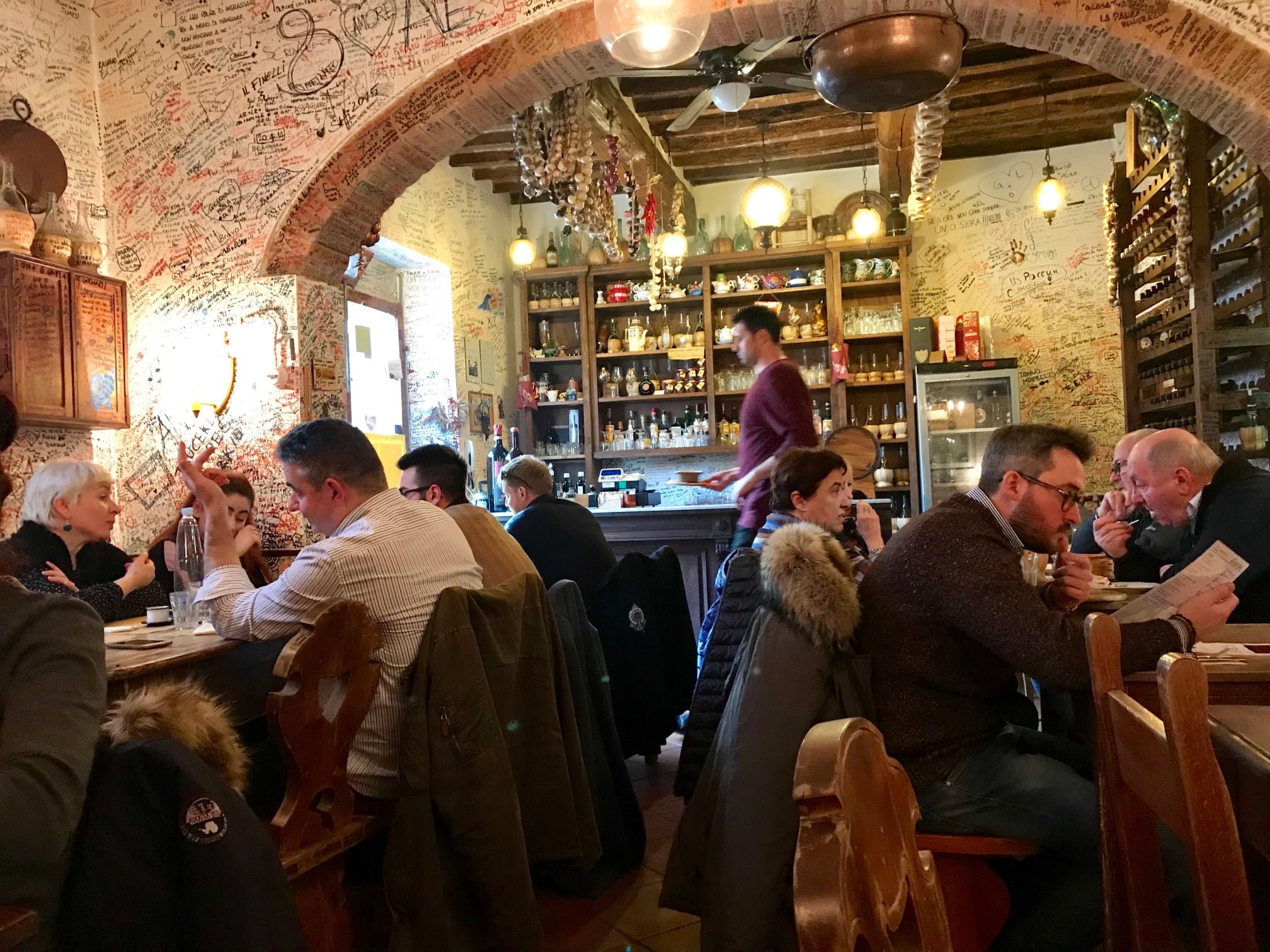
Wine casks dangled below a wooden beam on the ceiling…..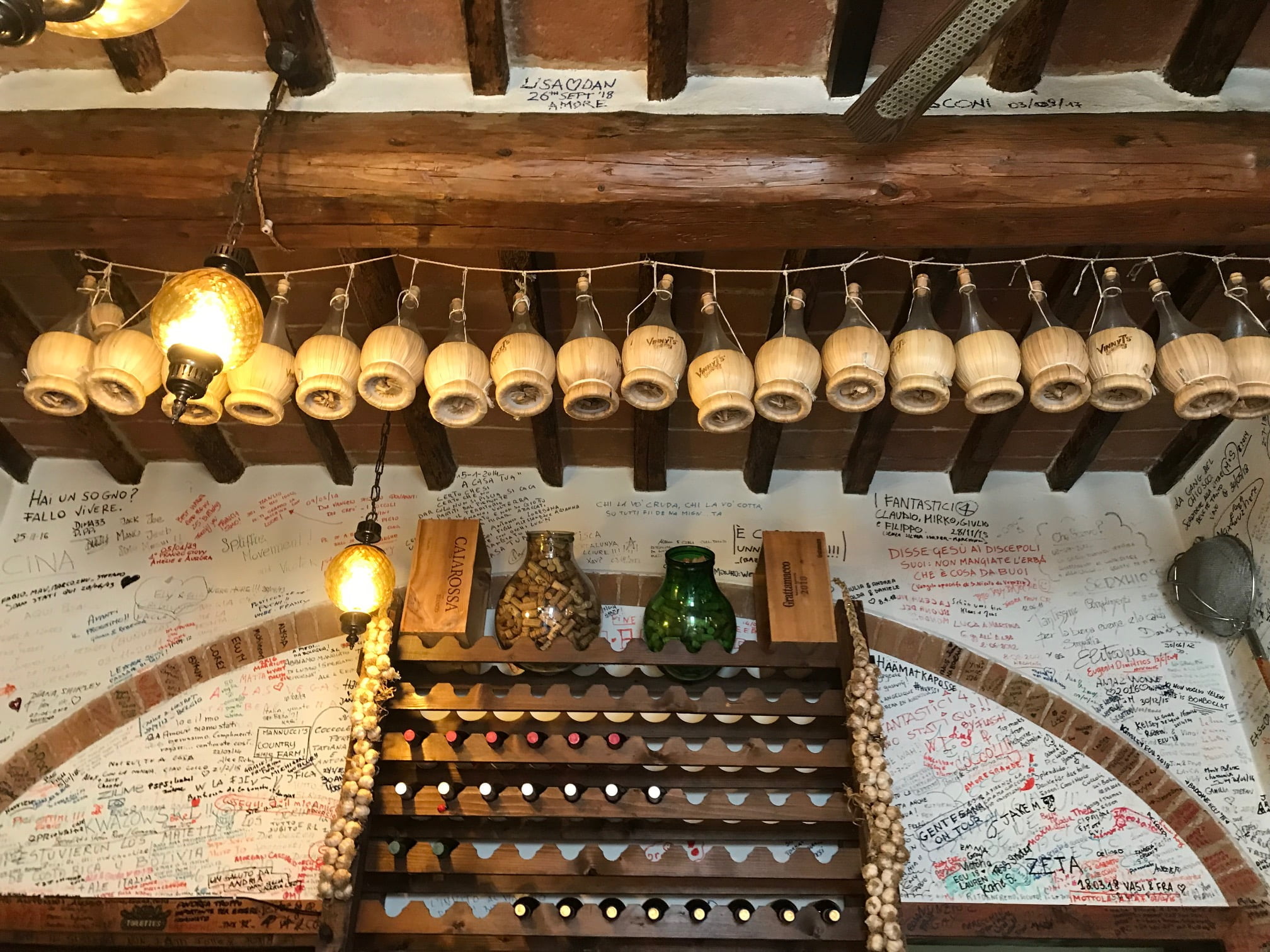
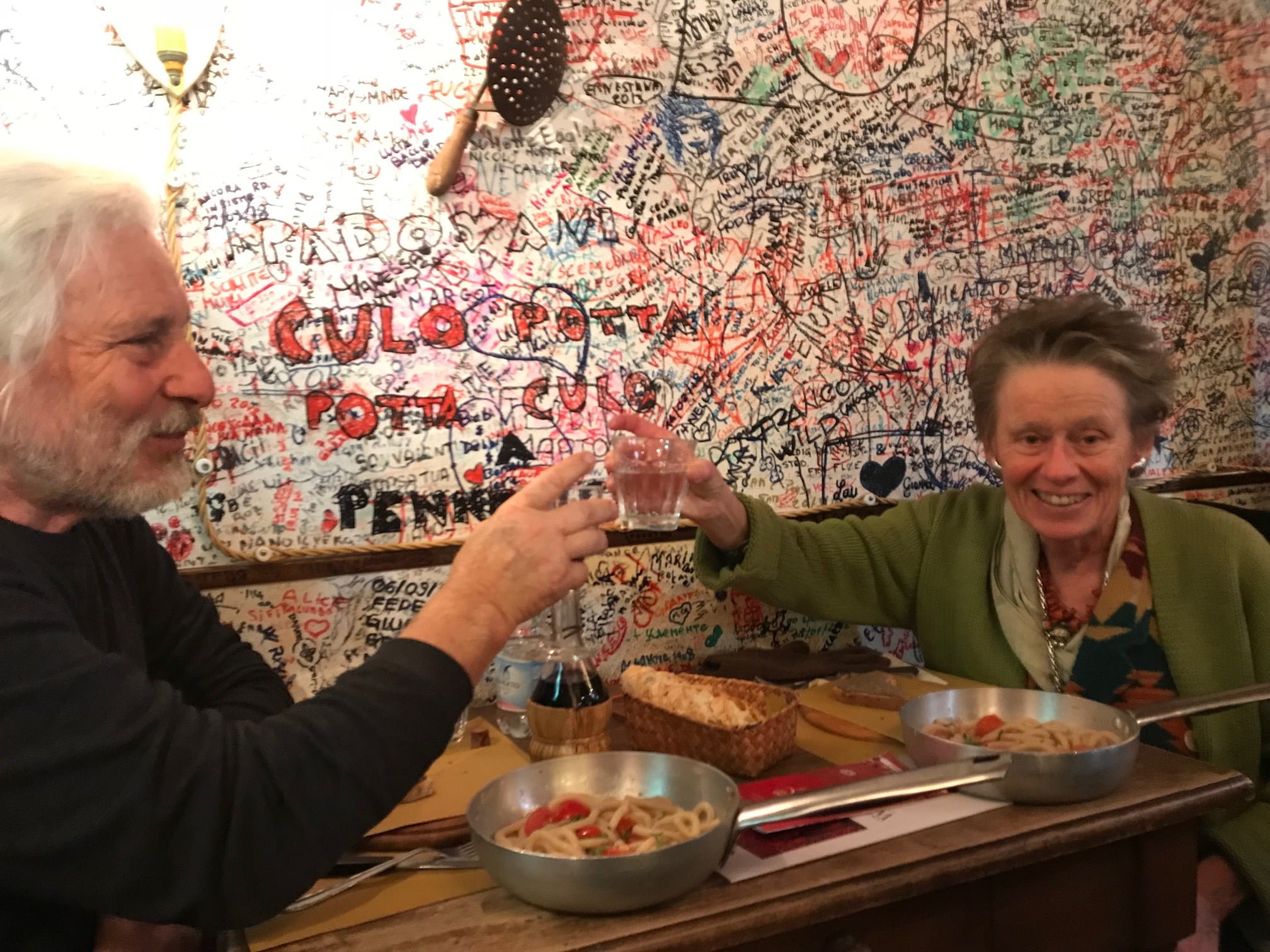
….and copper pots hung above clients’ colorful graffiti scribbled on the white walls: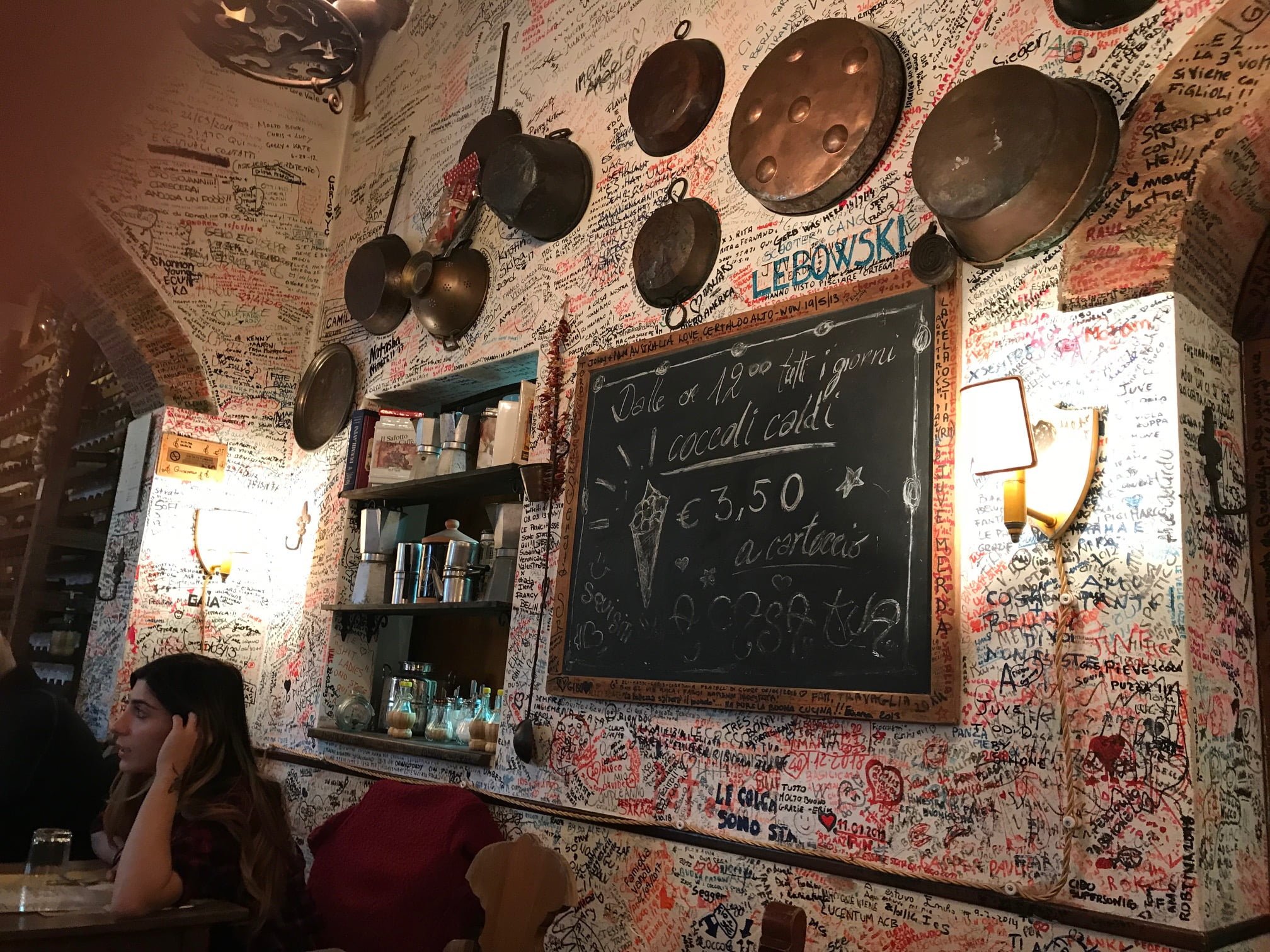
Various dishes tempted on the menu…..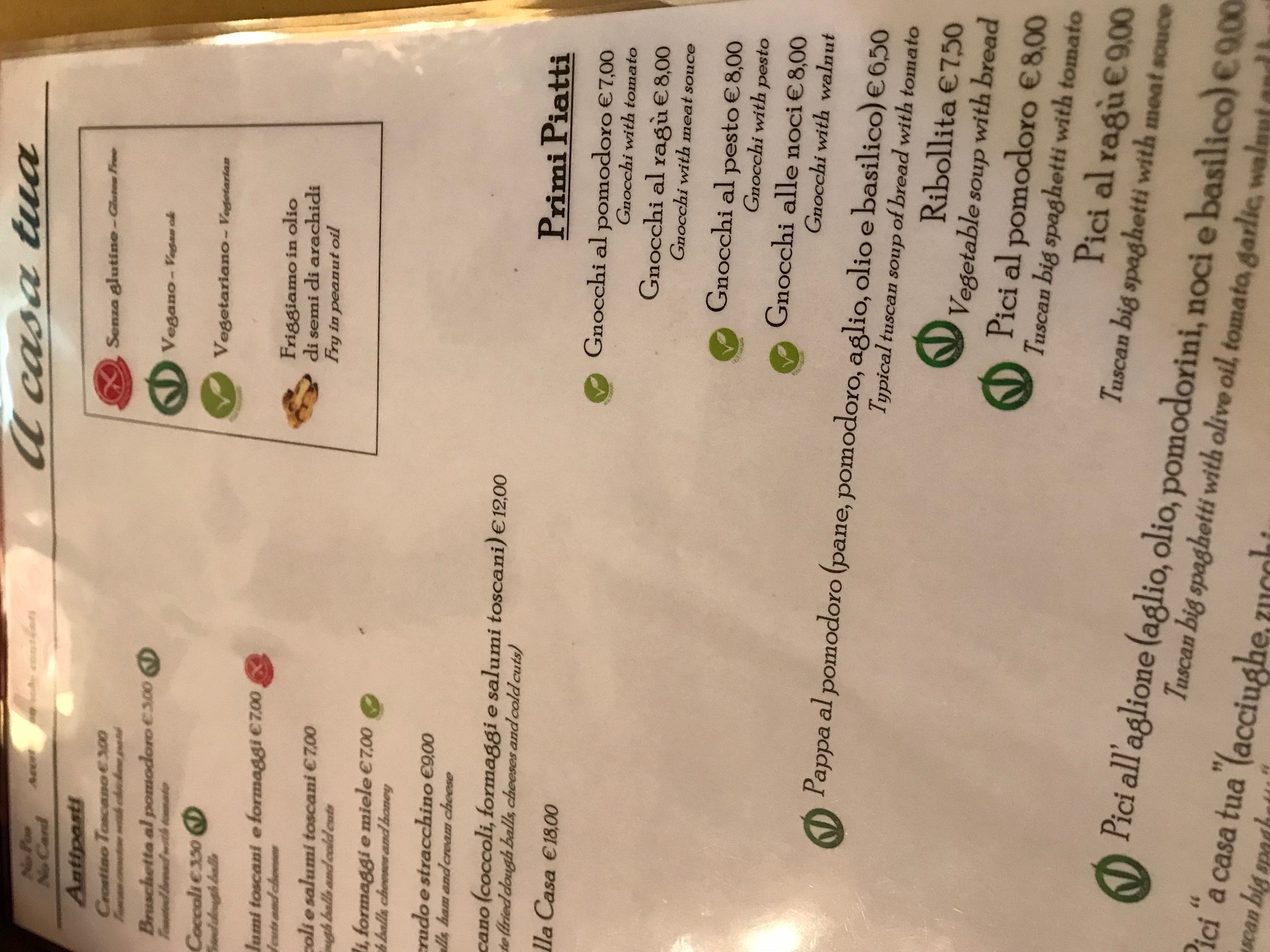
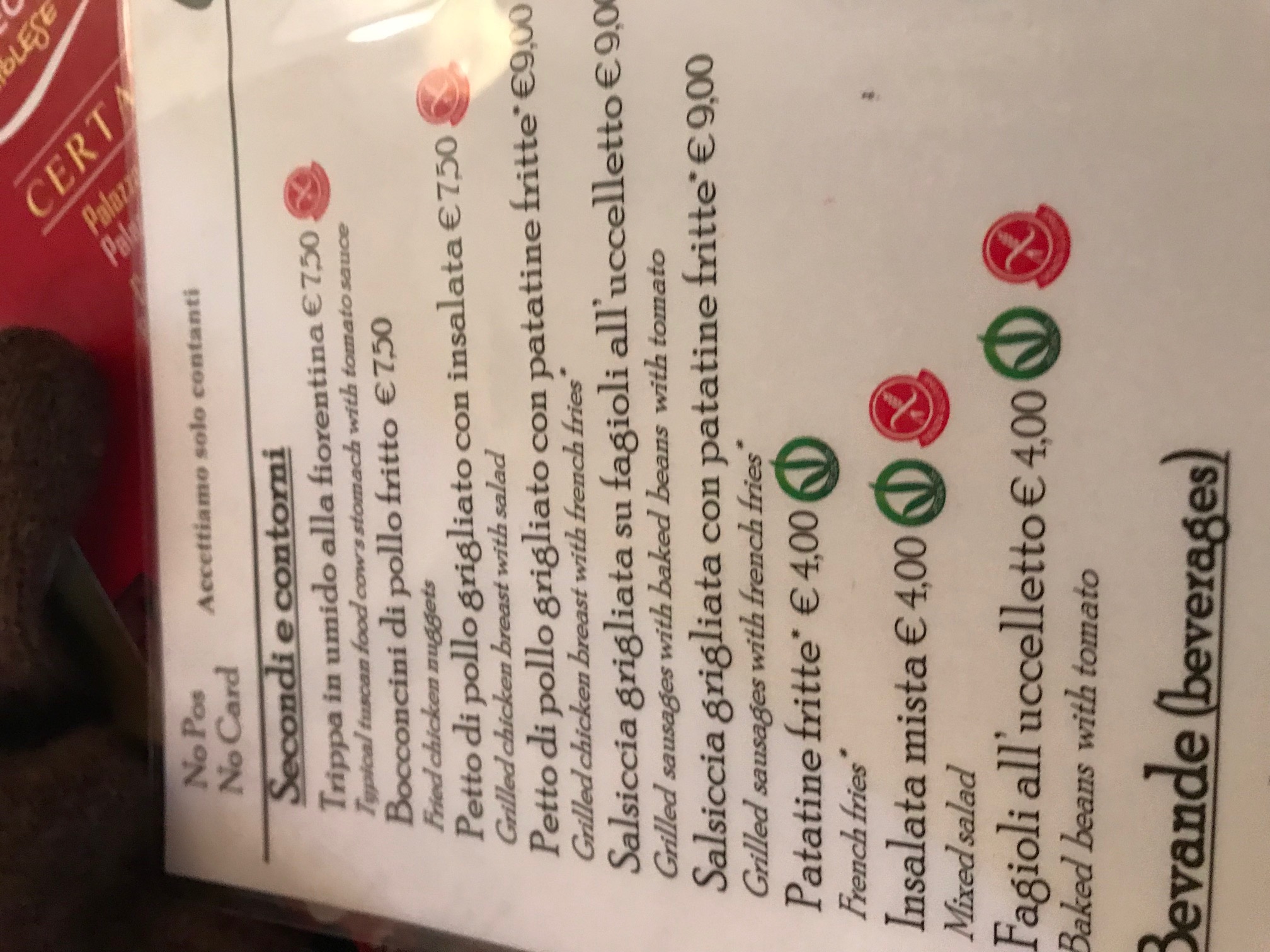
…but their version of pici all’aglione intrigued: we’d never tried a walnut addition to this favorite tomato/garlic sauce on thick spaghetti ( called “pici” in Tuscany and “strangozzi” here in Umbria).
And this all’aglione was served to us in small aluminum pans, reminiscent of rural times past when there were few plates in the farmhouse and the last one served, Papa’, often just ate from the pot or pan.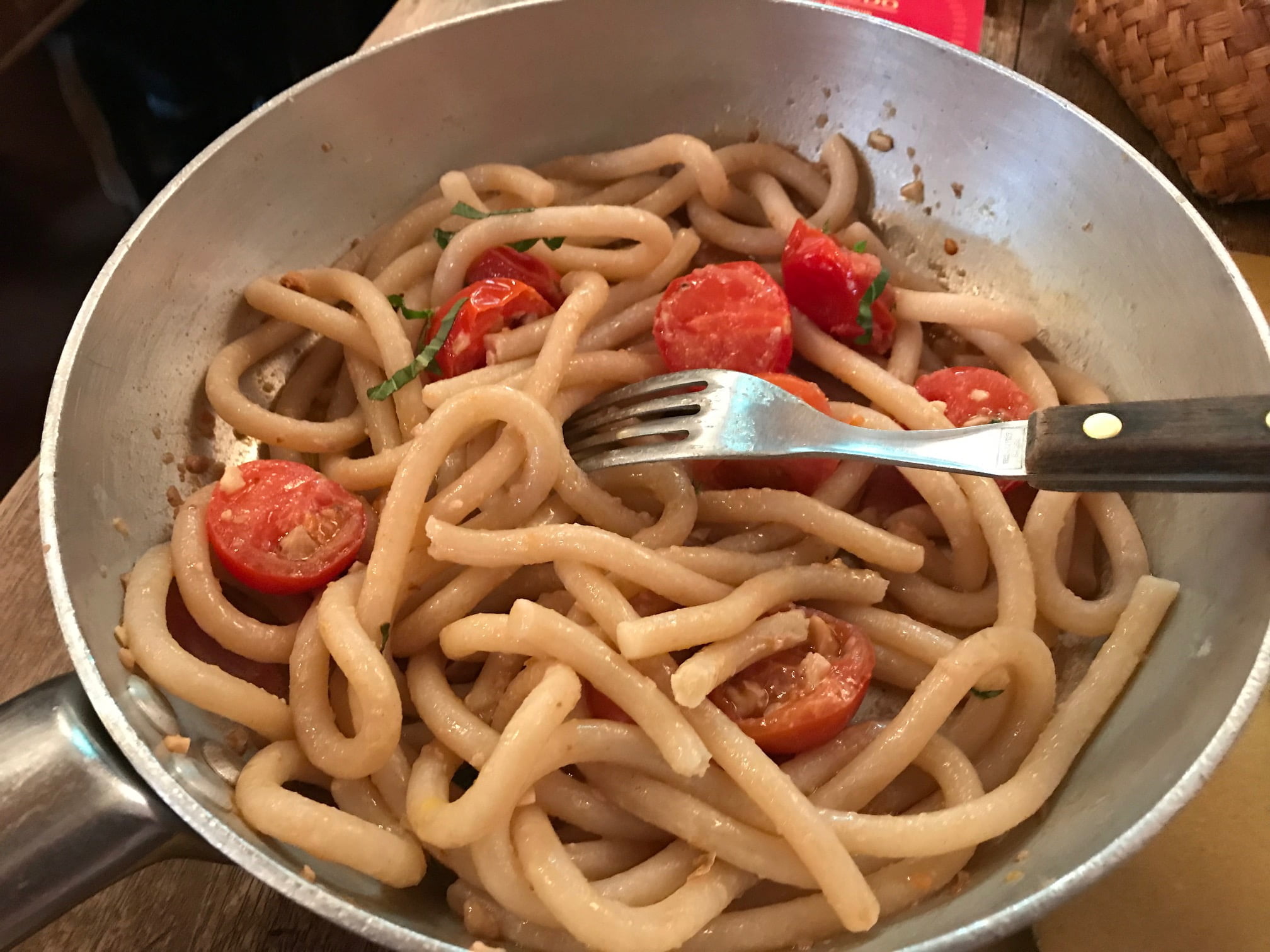
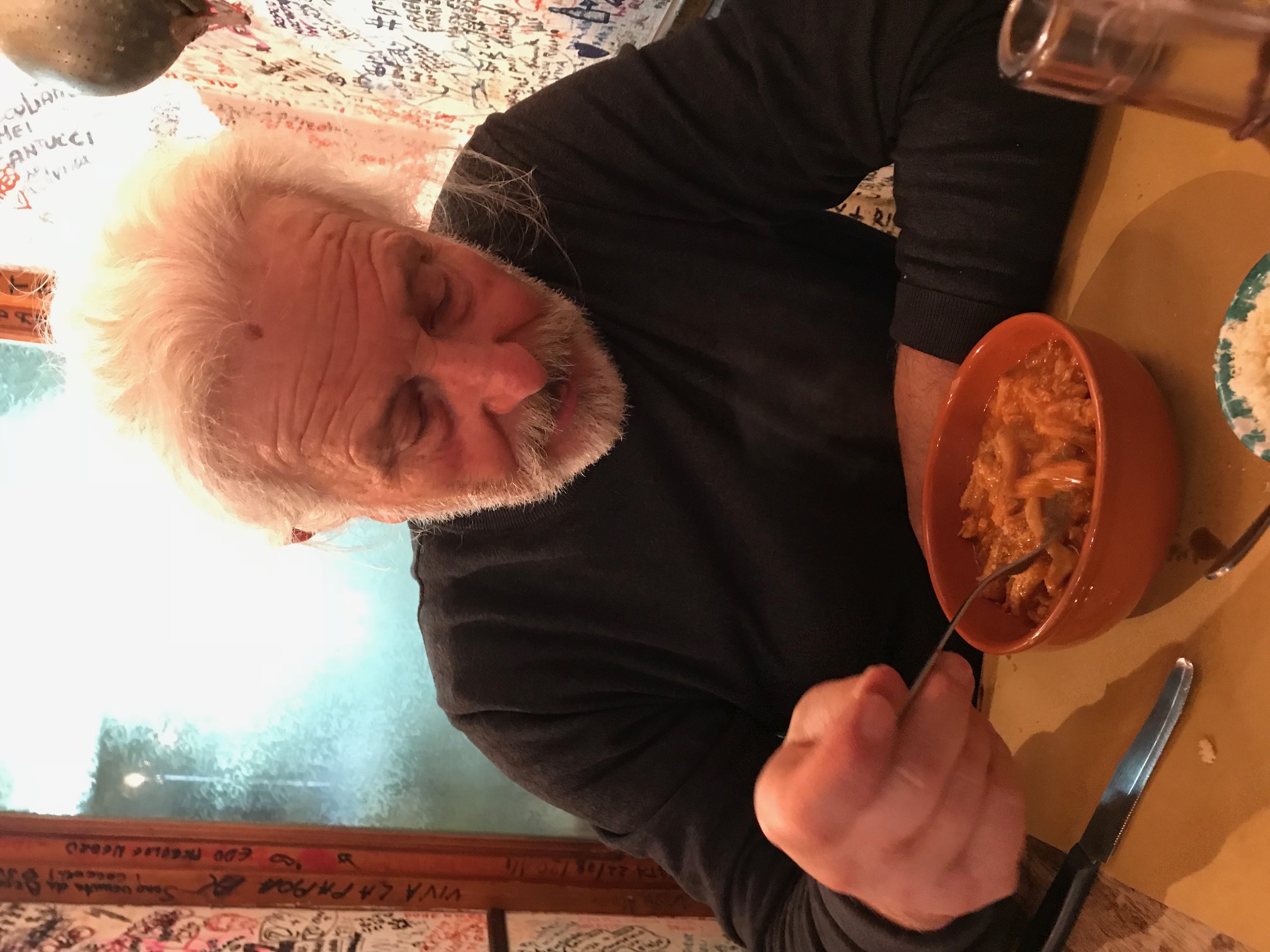
After the pasta dish, just the cannelloni beans for me and Pino – predictably! – chose the trippa (tripe):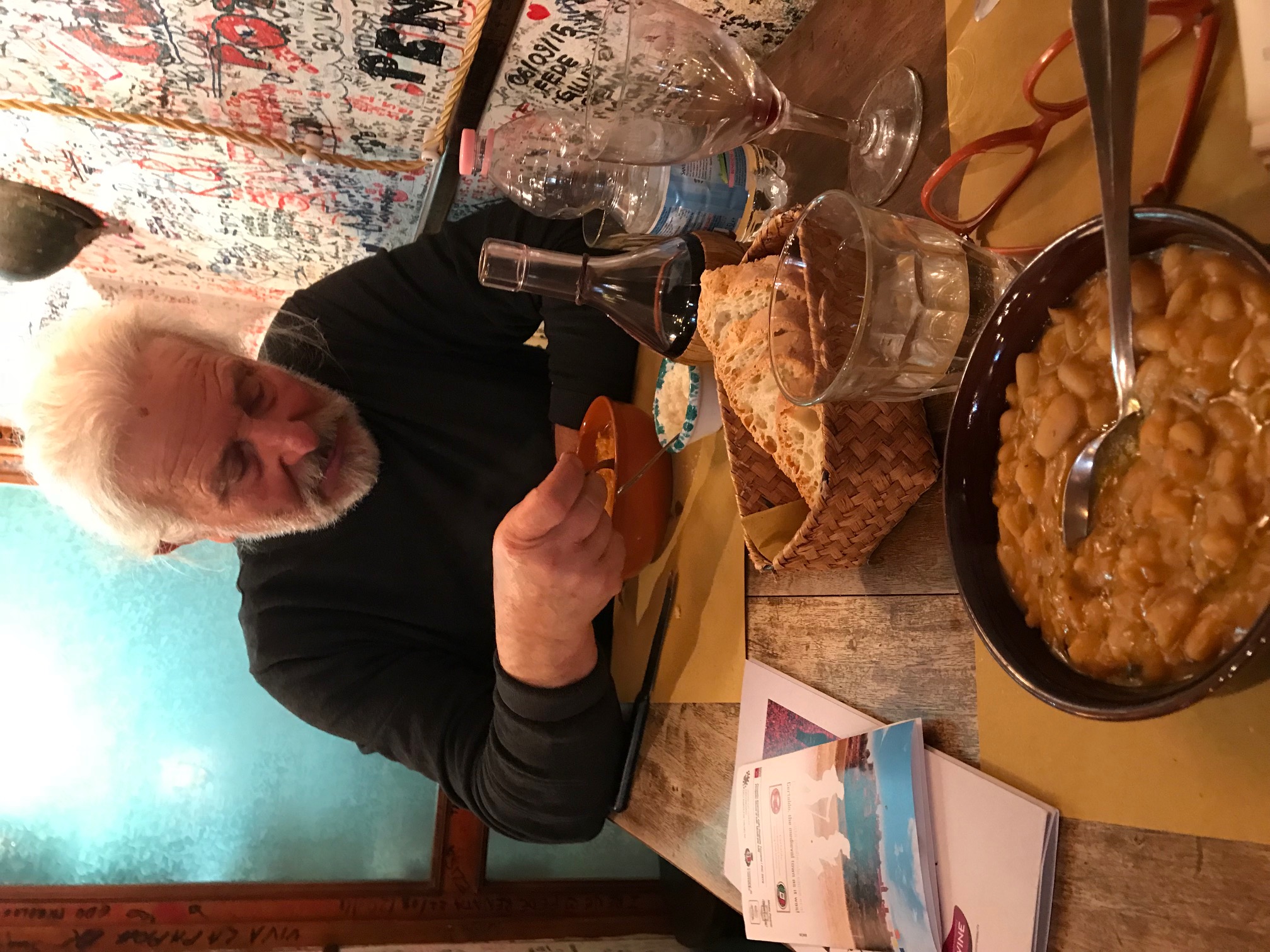
…and logicamente, when in Tuscany wherever we are, we’ll always try their liver pate’: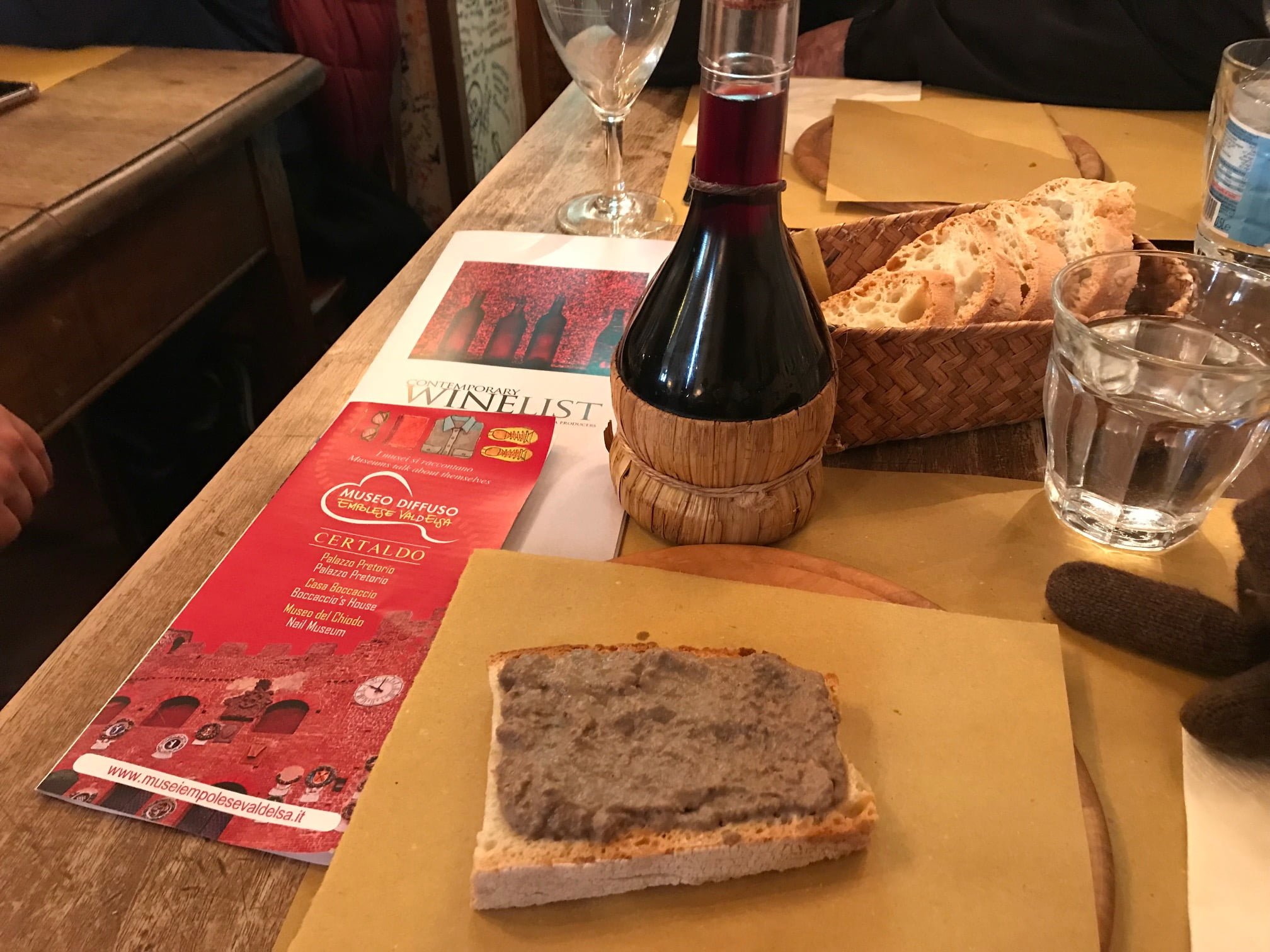
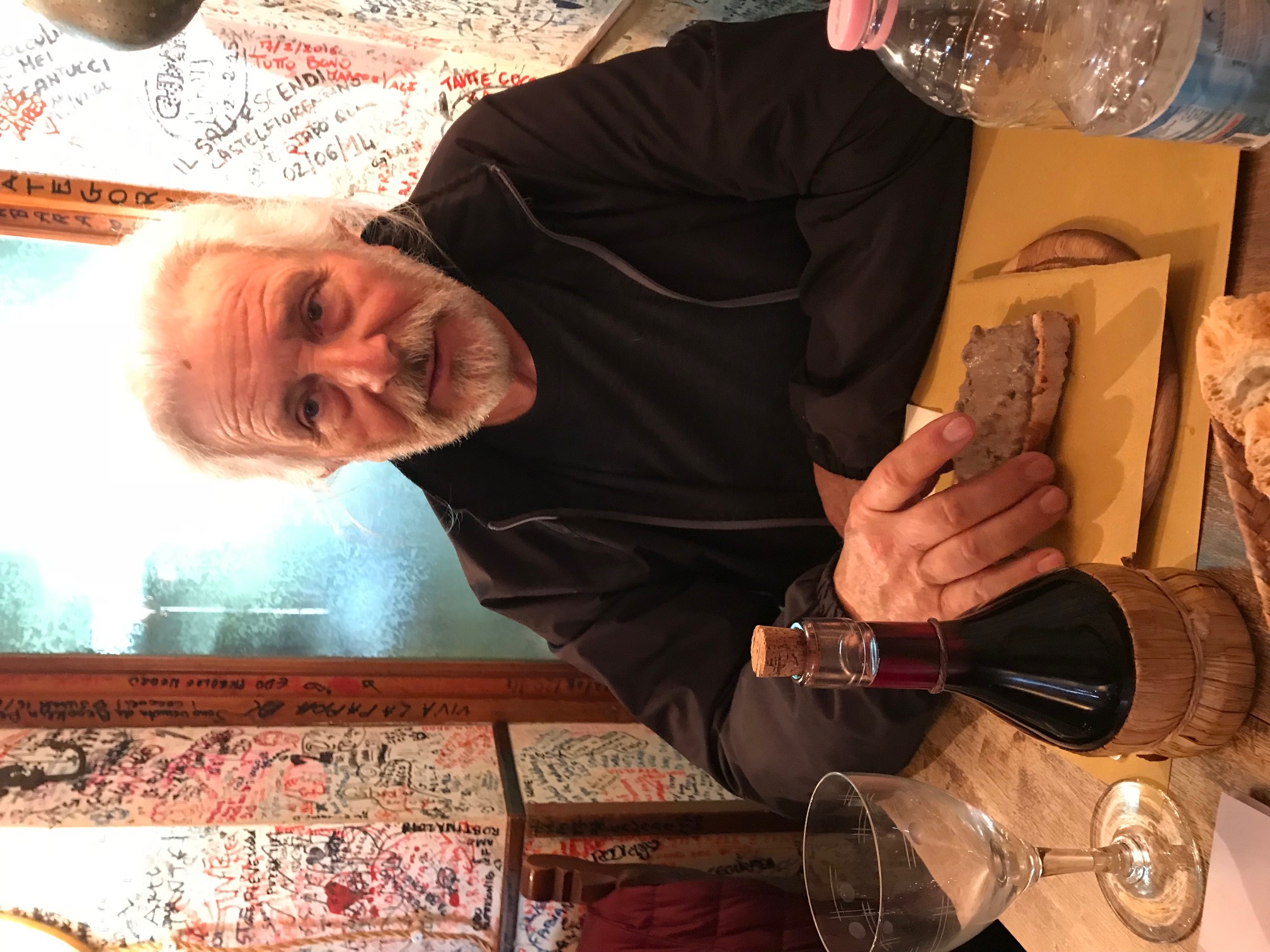
Before we left, our host brought us a marker so that we could leave a note: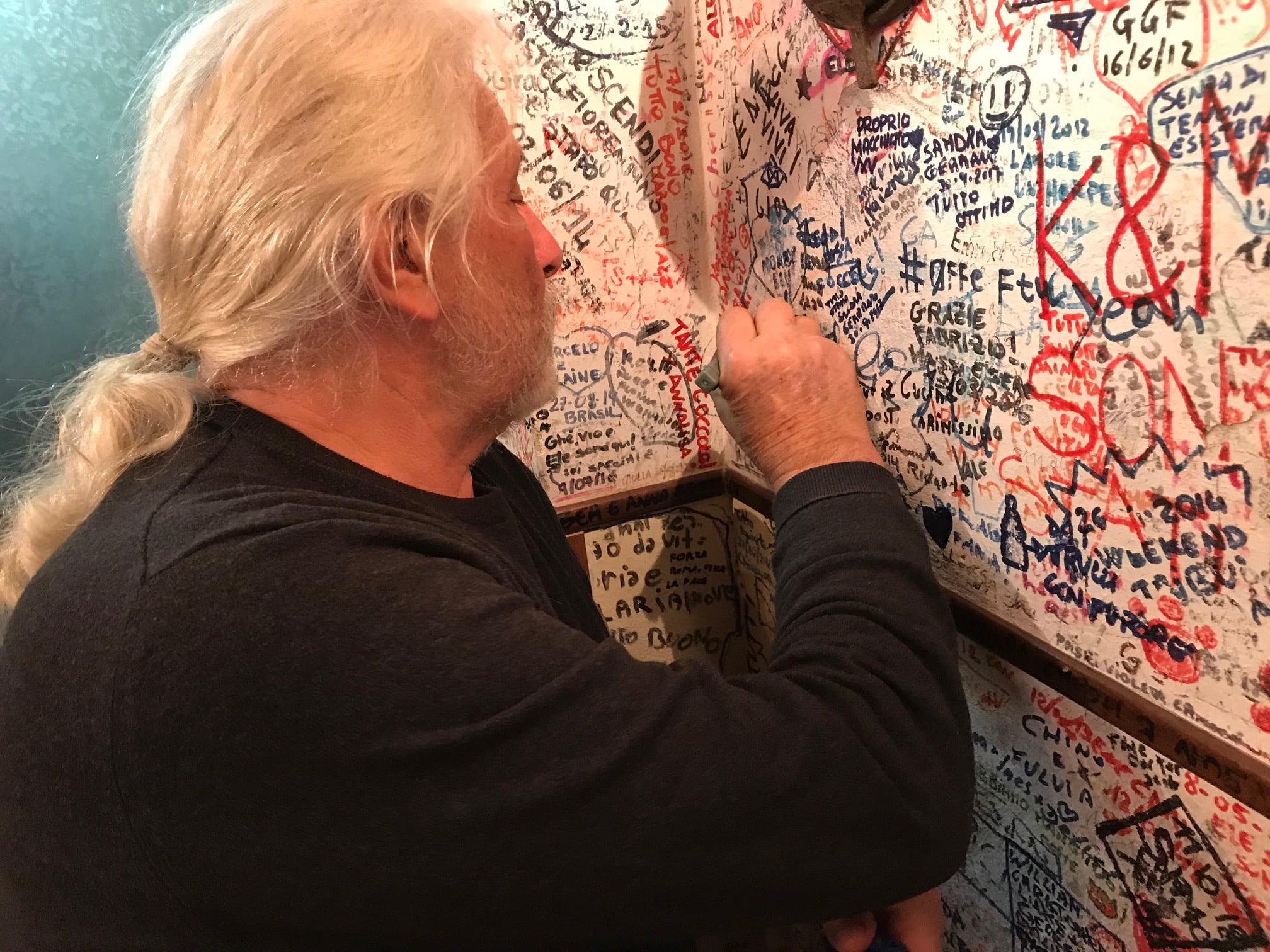
We’d ended our tasty lunch at A Casa Tua without having tried their signature dish on the antipasto platter, the fried bread dough balls nibbled with prosciutto and a soft cheese, stracchino: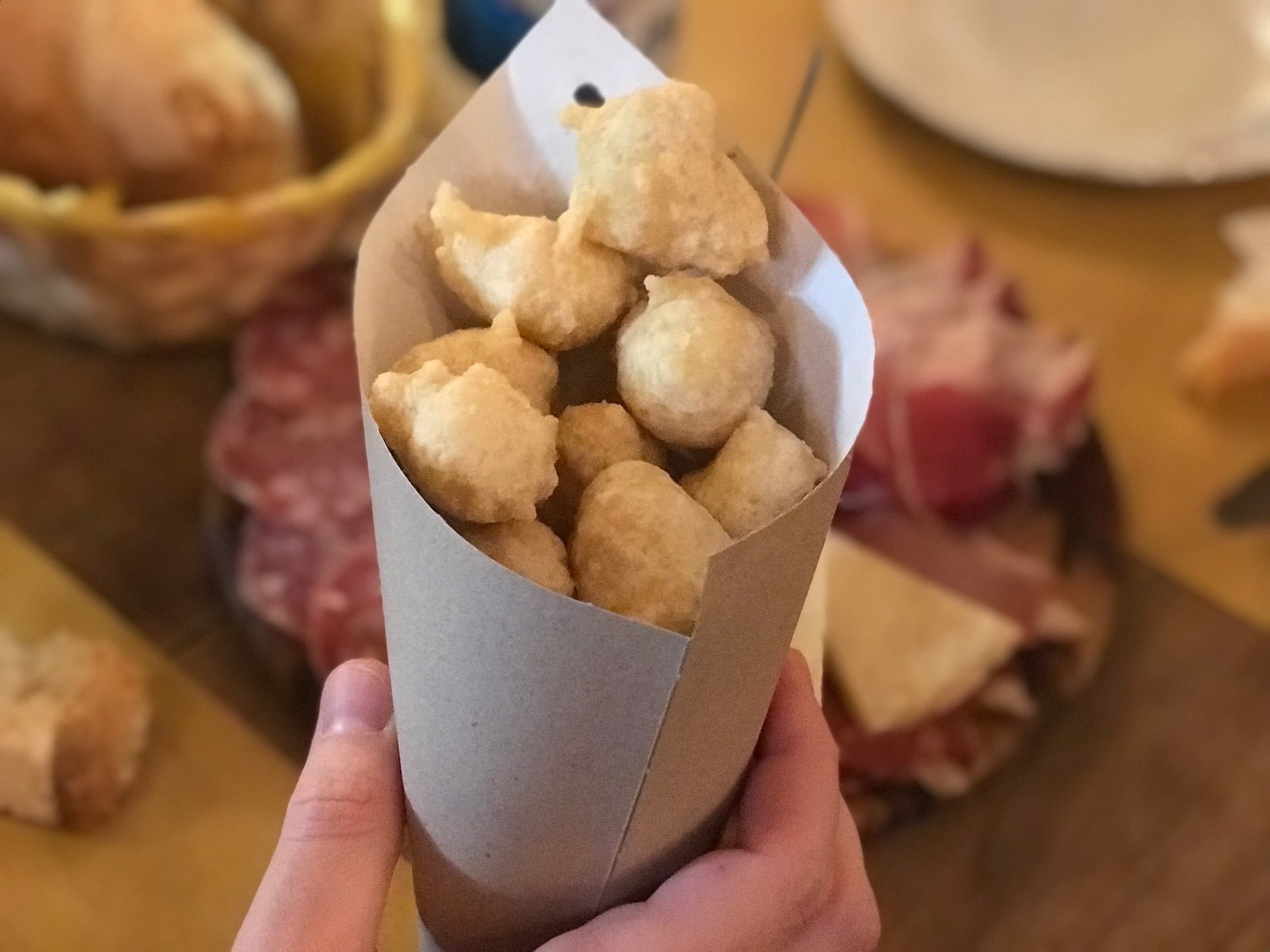
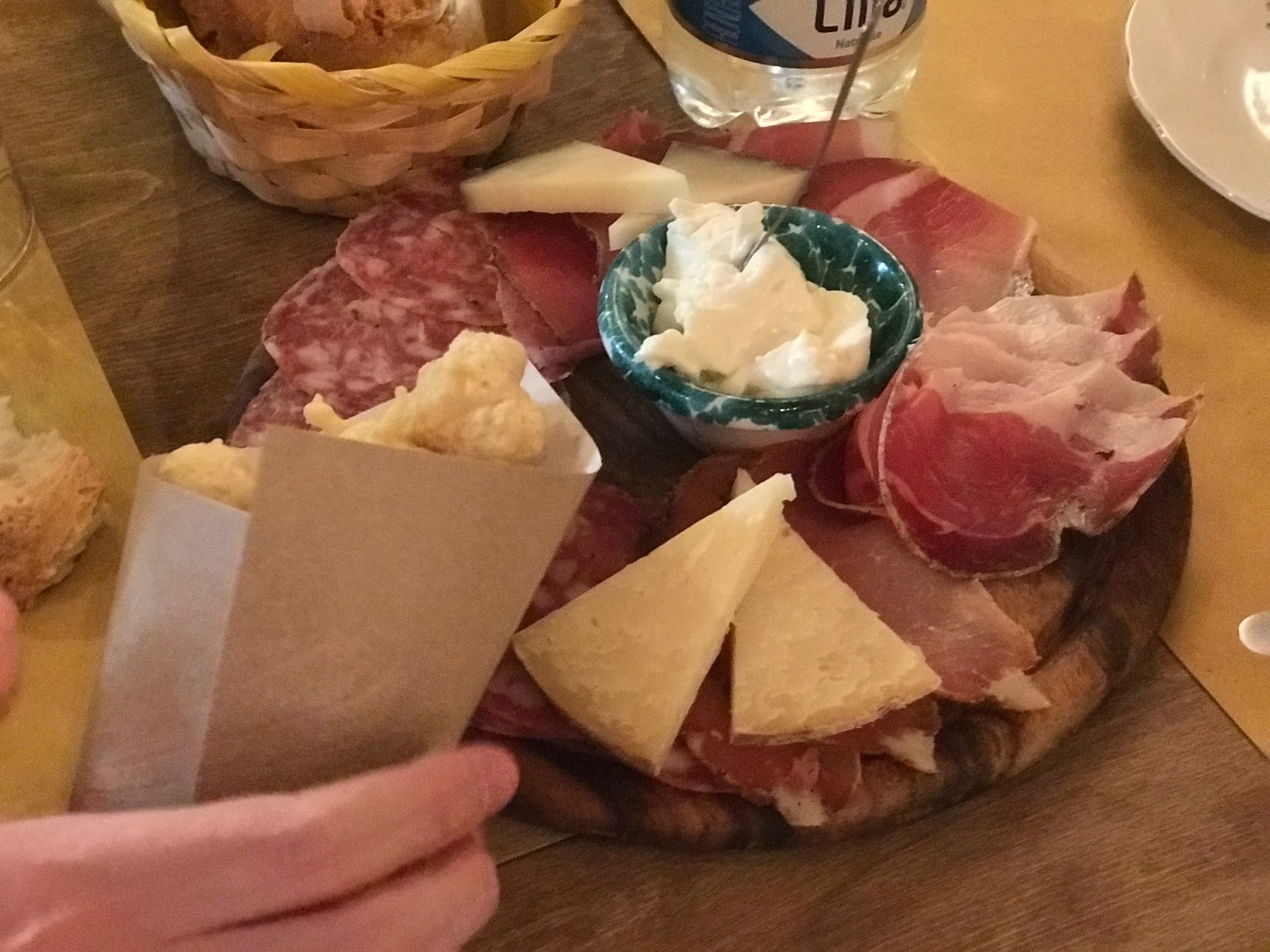
They’re called i coccoli (“the cuddles”): a bit of Boccaccio decadence?
Read here about a truly authentic pici all’aglione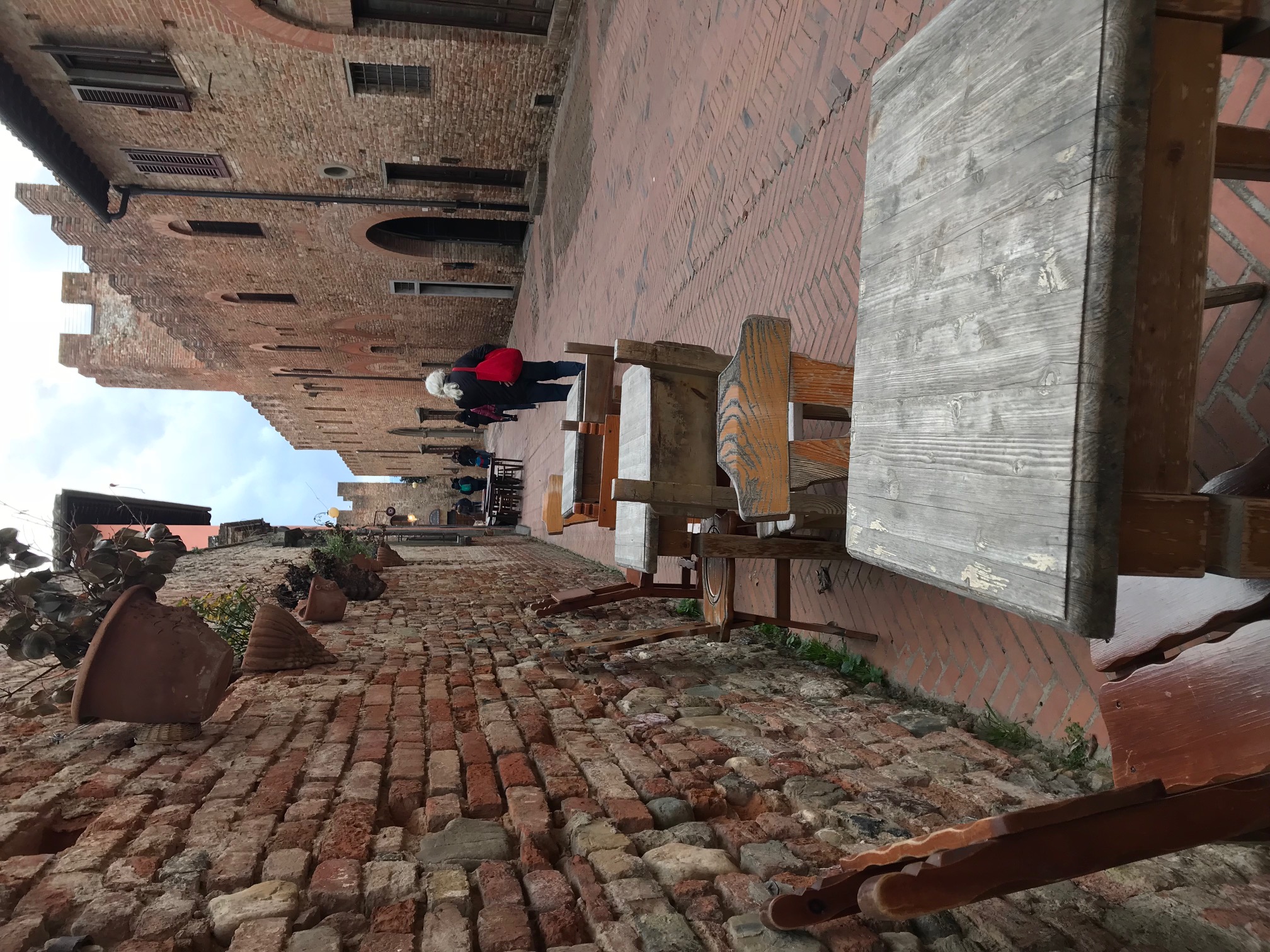


Can’t wait to see it, Anne, the next time we get your way! Wonderful pictures and descriptions!
Mary, come visit soon and we can go there together!
Wonderful!!
Wonderful!
Yes, a magical spot!
Love your eye, Annie. You really capture the essence of these towns. Beautiful photos.
Jan
Mille grazie, Jan! Come back and visit and we’ll go there together!