
The bell tower is the focal point of any Italian town and the loyalty to one’s bell tower – that is, one’s town – supplants nationalism in Italy. Campanilismo (literally, “belltower-ism”) is directly linked…

The bell tower is the focal point of any Italian town and the loyalty to one’s bell tower – that is, one’s town – supplants nationalism in Italy. Campanilismo (literally, “belltower-ism”) is directly linked…
When you arrive in the grandiose Piazza Grande of Gubbio, the majestic 14th-century civic building Palazzo dei Consoli, rises like a solemn guardian presiding sternly over Gubbio. Unequivocal symbol of medieval glory…
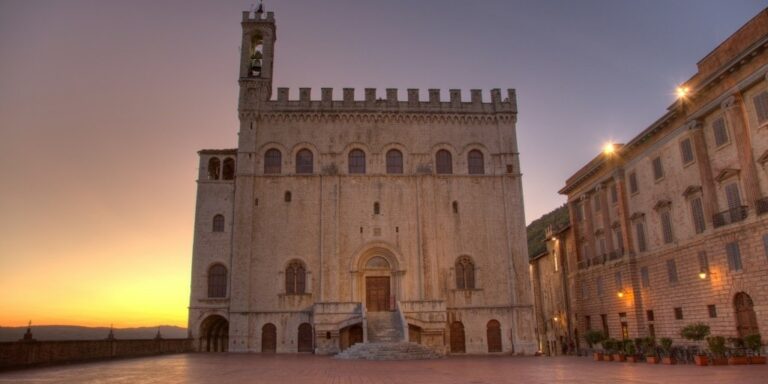
Viewed from practically wherever you are in Gubbio, Palazzo dei Consoli rises proudly as testimonial to Gubbio’s political objectives in the early 14th century. Palazzo dei Consoli – originally called “Palazzo…

The Basilica di Sant’Ubaldo is perched near the peak of Mt. Ingino, seeming to survey Gubbio spread out below. There are two options for climbing Mt.Ingino so as to visit the…
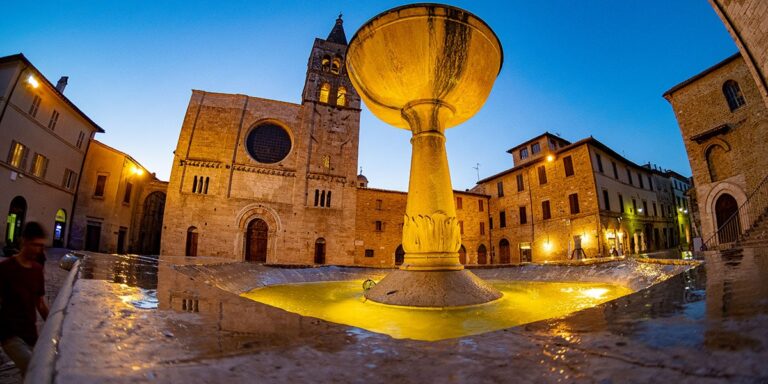
A few of Bevagna’s treasures face the Piazza Filippo Silvestri; certainly, the two churches – the Church of San Silvestro and San Michele Arcangelo – among Umbria’s finest Romanesque ones. They face…
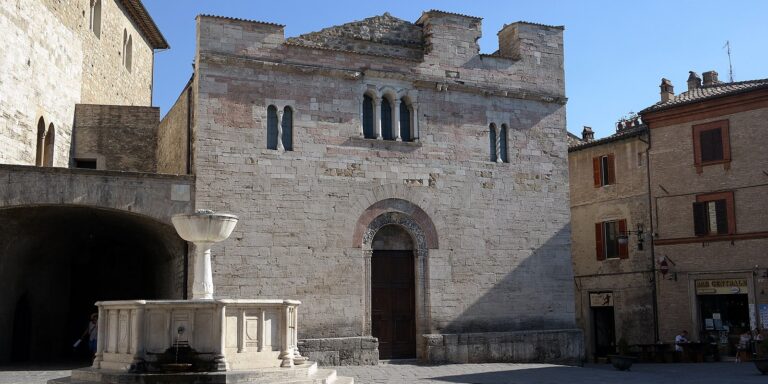
The main piazza of Bevagna, Piazza Filippo Silvestri, could almost be a theatrical setting – and has been a backdrop for more than one film set in the Middle Ages. The 13th-century…
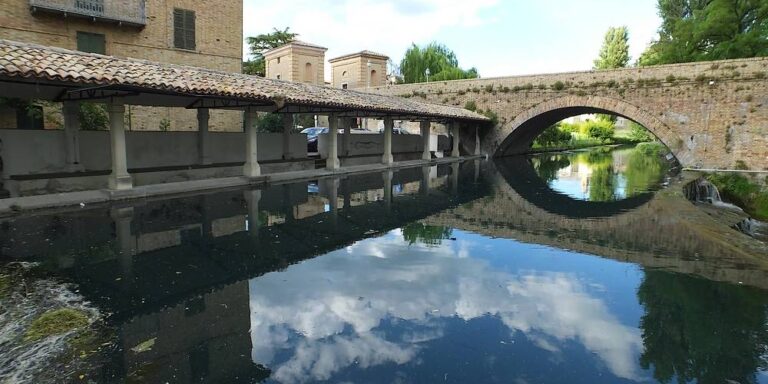
Just a couple parking lots are outside of Bevagna’s medieval walls. They’re free and just a few cars are parked in them – and they’ll probably be of local bevanati. Already a sign…

Of black and white tesserae, a delicate mosaic lobster with claws outstretched and tail swerving is one of the most intact and refined vestiges of the Roman Mevania (today, Bevagna). To the…
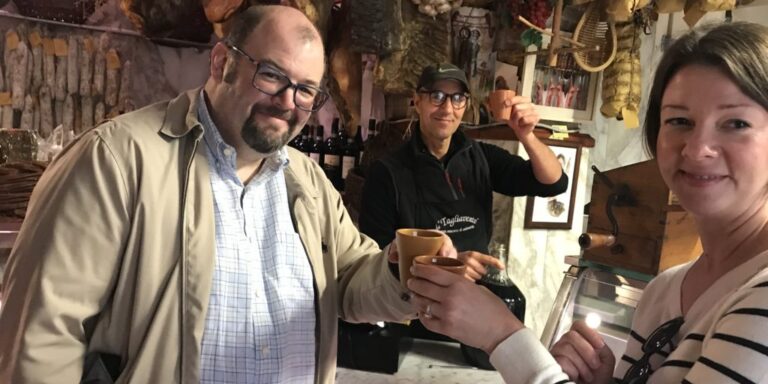
You probably already knew that in Italy, accents can vary town-to-town, even at a ten-kilometer distance – or less. Did you know that types of pasta vary as well…even town-to-town? Many people…
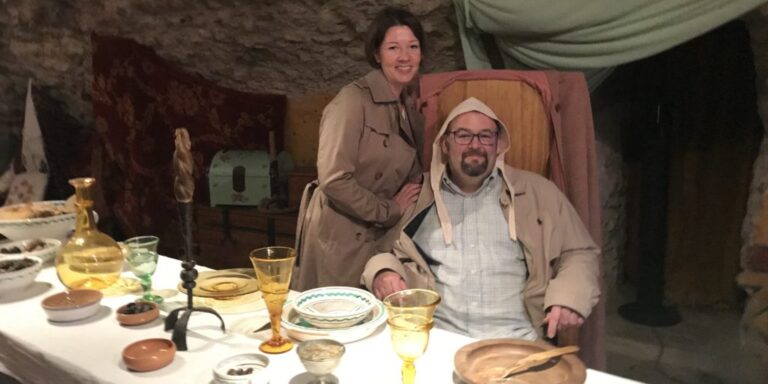
When you wander the backstreets of Bevagna and pass this delightful small courtyard… …look out for this sign – and do head to the Roman theater and medieval house: …